Ronald Kolb
Post-Exhibitionary Practice
Fall Assembly – Collecting, preserving, enjoying – the power of abundance & the art of sharing
26–28 September 2025
Artistic Director
Arthur Boskamp-Stiftung



https://www.m1-hohenlockstedt.de/en/kuratieren/m1-kuratieren-202526/fall-assembly/
Fall Assembly
part of Art as Ecological Practice (2025–26)
Curated by Ronald Kolb
Kindly supported by Swiss Arts Council Pro Helvetia, Ville de Geneve, Bingo! Projektförderung Schlewsig-Holstein, Kulturprojekte Schlewsig-Holstein, Kunstförderung Kultur Land Schlewsig-Holstein
With contributions by Ulrike Boskamp, Katja Schröder, Ronald Kolb, Maj Hasager, Astrid S. Klein, Seraina Grupp, Byungseo Yoo, Daniela Zambrano Almidón, Erika Harzer, Maya Minder, Dominique Leroy, Camilla Berner, Lene Markusen, Marta Musso, Riikka Tauriainen, Myu Hanaoka, Marle Rudolph, Wiebke Habbe, Biohof Springhoe and numerous participants from Hohenlockstedt and the surrounding region.
The Fall Assembly was the third gathering within the exhibition project “Art as Ecological Practice” at M.1 in Hohenlockstedt. After the Summer Assembly titled “Walking, Talking, Working – Queering Landscape & Liquid Ecology”, the autumn season turned towards themes of harvest, preservation and distribution – emphasising on abundance – under the title: “Collect, Preserve, Enjoy – The Power of Abundance & the Art of Sharing.”
The Fall Assembly 2025 unfolded as a festival of abundance – in potatoes, algae, sourdough, cola plants, preserves, bouquets, films and stories. What emerged was not accumulation, but a practice of distribution and generosity: of active listening, preserving, fermenting, tasting, sharing, remembering and reimagining. Through its multifaceted, sometimes overwhelming programme of rituals, workshops, lectures, performances and exhibiting, the Assembly deepened the central question of the project: How can ecology be lived and practised as an art of sharing – in times of ecological crisis and social transformation? The Fall Assembly offered one possible answer: by celebrating abundance not as excess, but as a relational power that grows through giving.
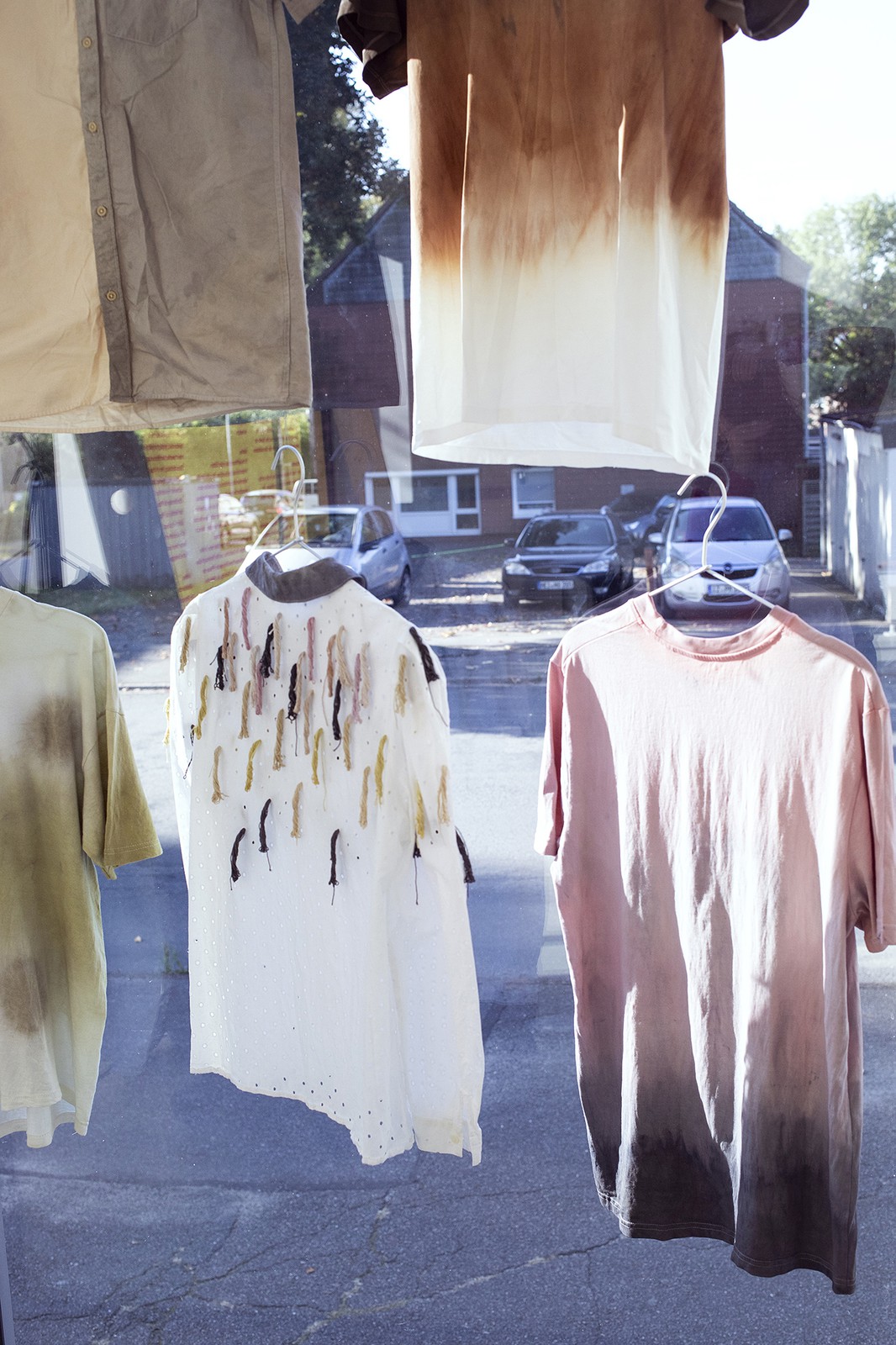
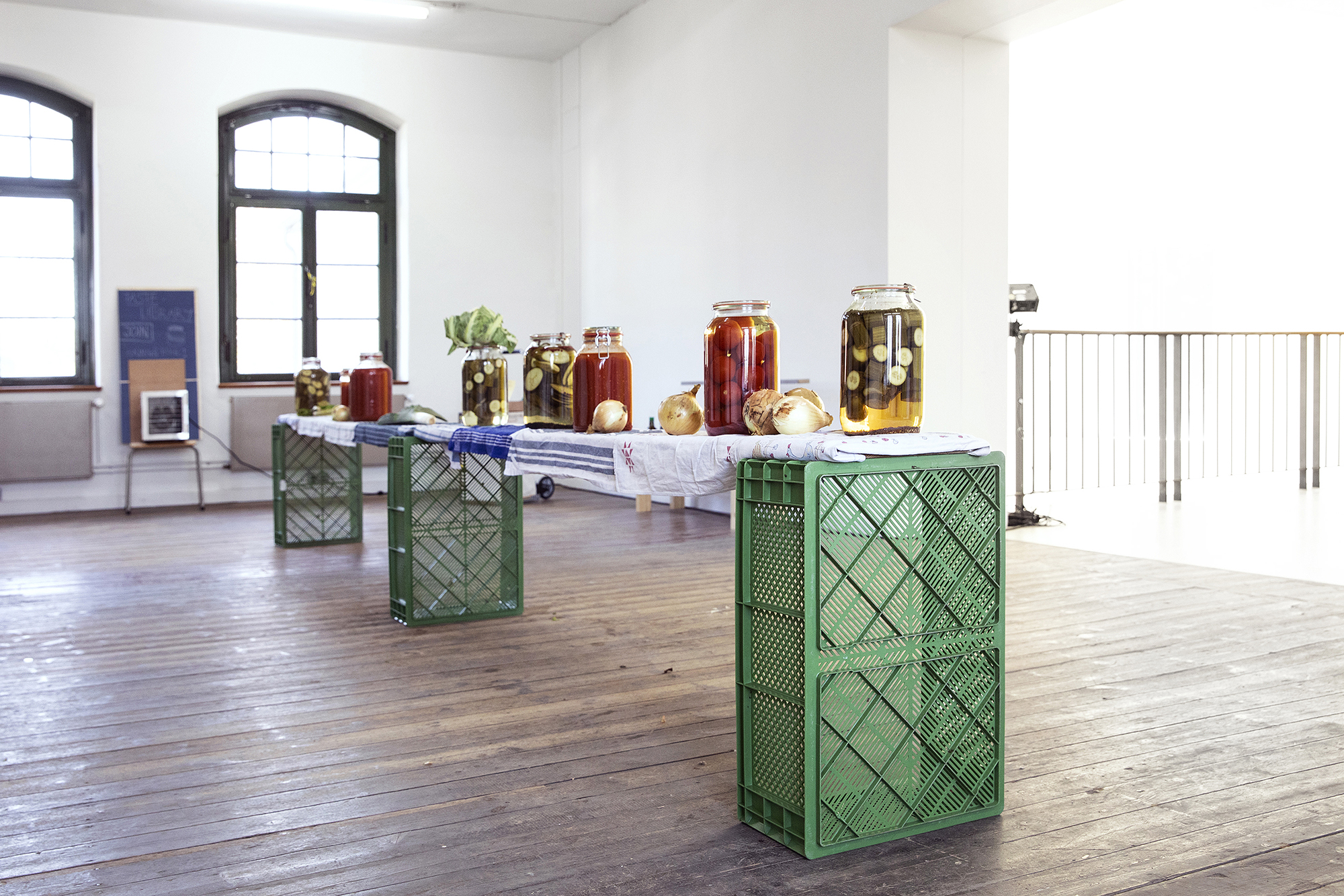
As in previous assemblies, the project pursued not only artistic presentation but also lived ecological practice. Food and materials were sourced locally and cooked collaboratively: surplus vegetables from the organic farm of Raphaela Kuhn and Bastian Weber in Springhoe were preserved and re-imagined in the Taste Library by Seraina Grupp with Marle Rudolph and Tabea Möllgaard; potatoes planted at the first assembly with Daniela Zambrano Almidón were harvested and transformed in a ritual of storytelling; and the participatory cooking performance of Byungseo Yoo turned dough into platforms of social choreography. Maya Minder’s workshop brought land food (potatoes) and sea food in form of seaweed together in a collaborative recipe-making workshop. Tokyo-based artist Myu Hanaoka presented her on-site research with found material (soil, and leftover food) for natural dying, which is connected to the project Arts of Upcycling by James Jack and Taro Furukata.
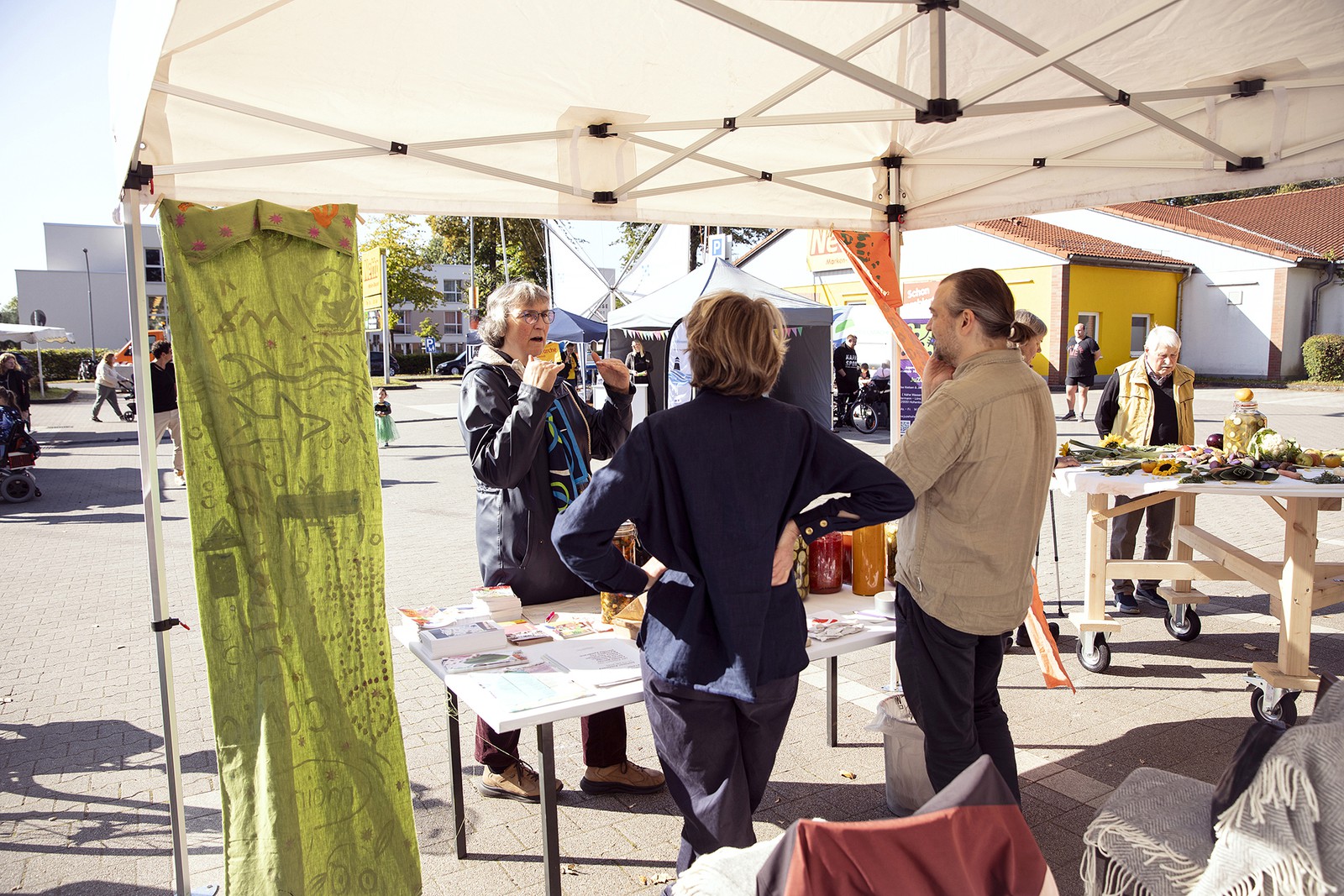
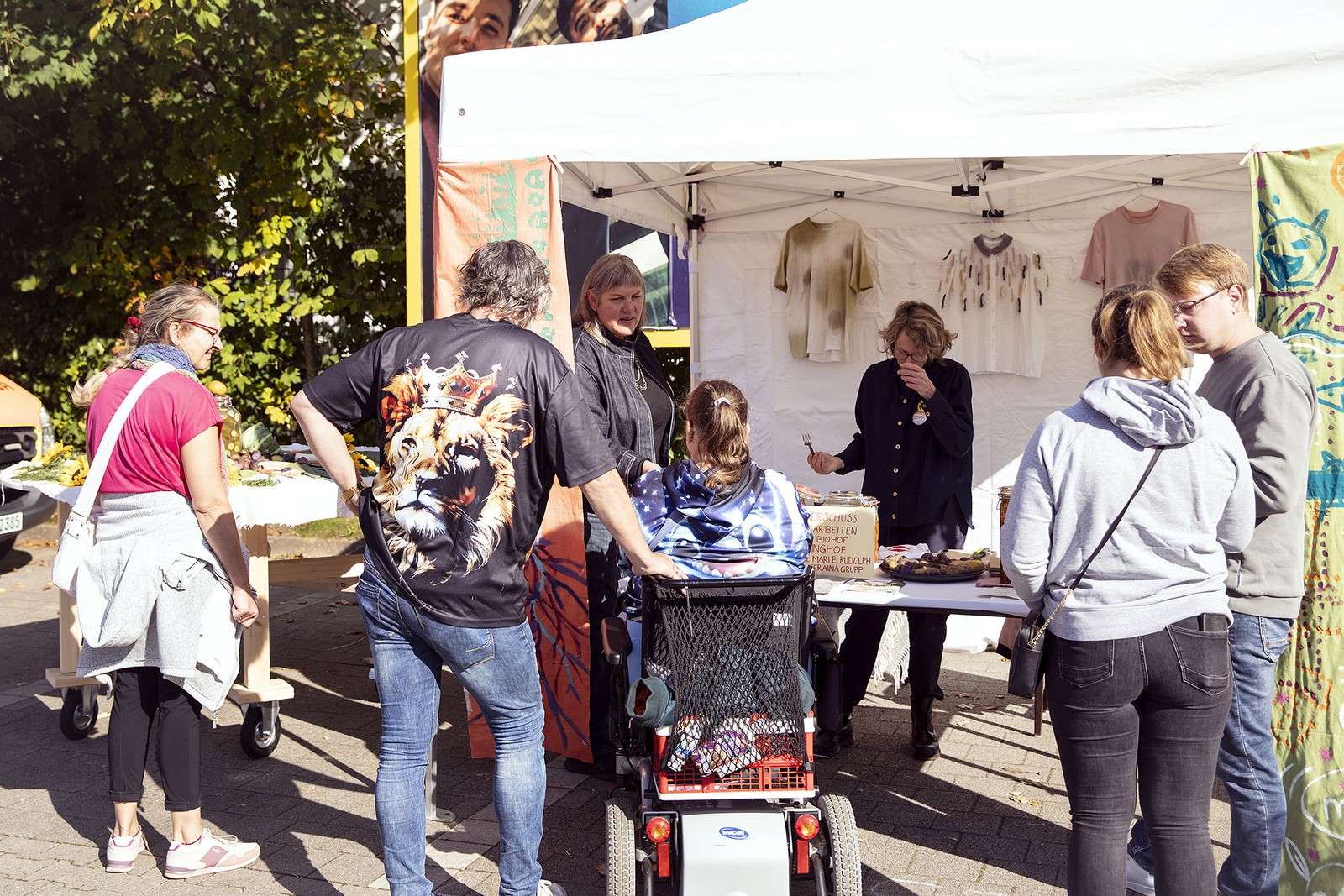
A booth at Hohenlockstedt’s village harvest festival, the “Pellkartoffeltage,” showcased the outcomes of the assembly’s first two days. Throughout the event, we engaged in numerous encounters with festival visitors, facilitating diverse and lively exchanges, sharing insights from the past days’ activities, and offering small food samples along the way.
The idea of abundance – often misunderstood as surplus or excess – was reframed throughout the Assembly as a relational practice: abundance is created through collaboration and care, through the cycles of harvest and preservation, through the new and old rituals of sharing food, knowledge, stories and responsibilities. In this way, the Assembly celebrated abundance as a counter-model to extractive accumulation – a resource that grows the more it is shared. This guiding principle resonated in the diverse practices on display: artworks, workshops, field trips, and cooking performances played out transdisciplinary between art, agriculture, science and everyday life. Participants were not simply observers, but active co-creators – tasting, cooking, listening, binding bouquets, fermenting, and carrying their own preserves into the library of flavours.
Day 1: Sharing knowledge – listening as practice
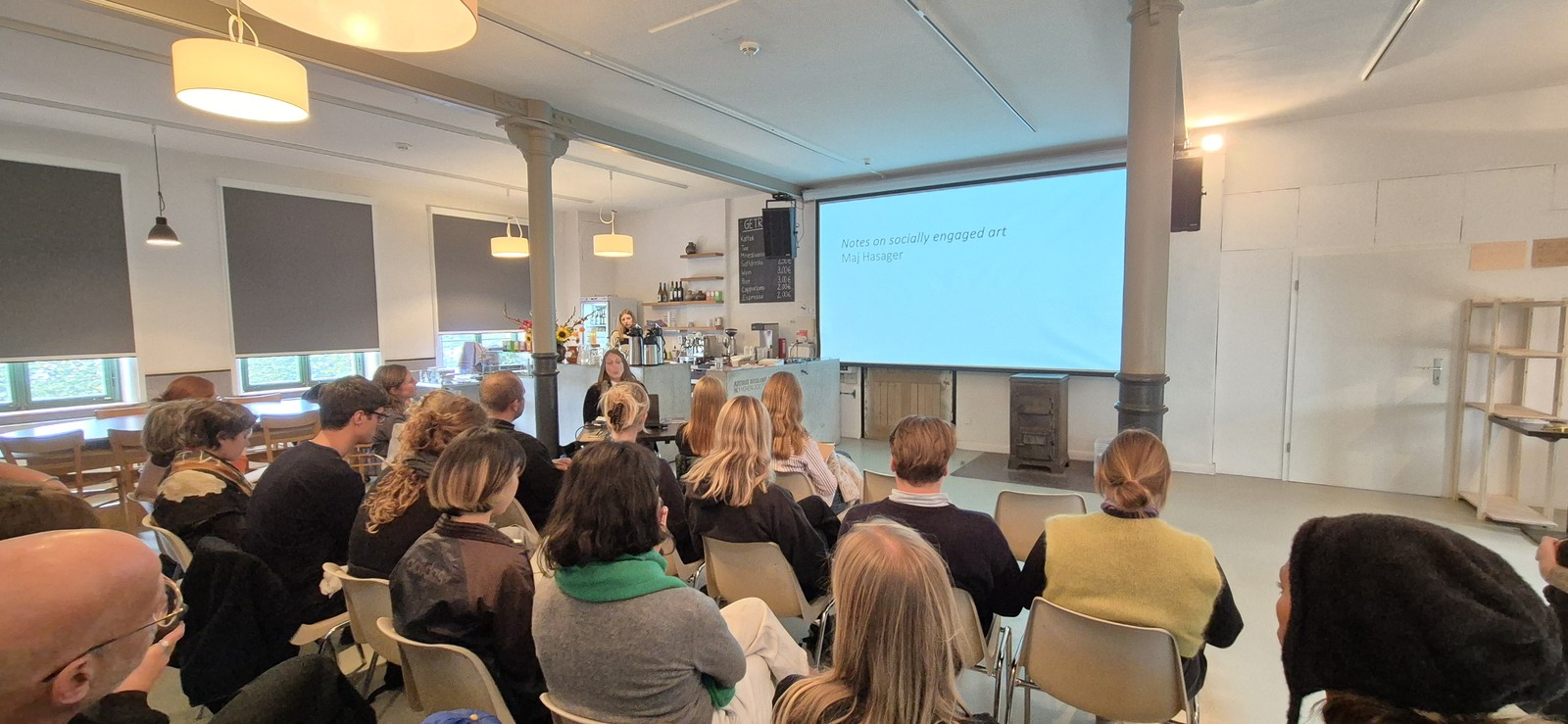
The Assembly opened on Friday, 26 September, with a tour of the exhibition spaces at M.1, followed by a lecture by Maj Hasager, rector of the Malmö Art Academy. Hasager’s reflections on socially engaged art framed artistic practice as a long-term commitment to people and places, emphasising listening, reciprocity and responsibility as key methods of knowledge production. We discussed the specific modes of these embedded art projects, and their exhibitionary formats, the diversified role of the audience as participant, co-user, constituent.
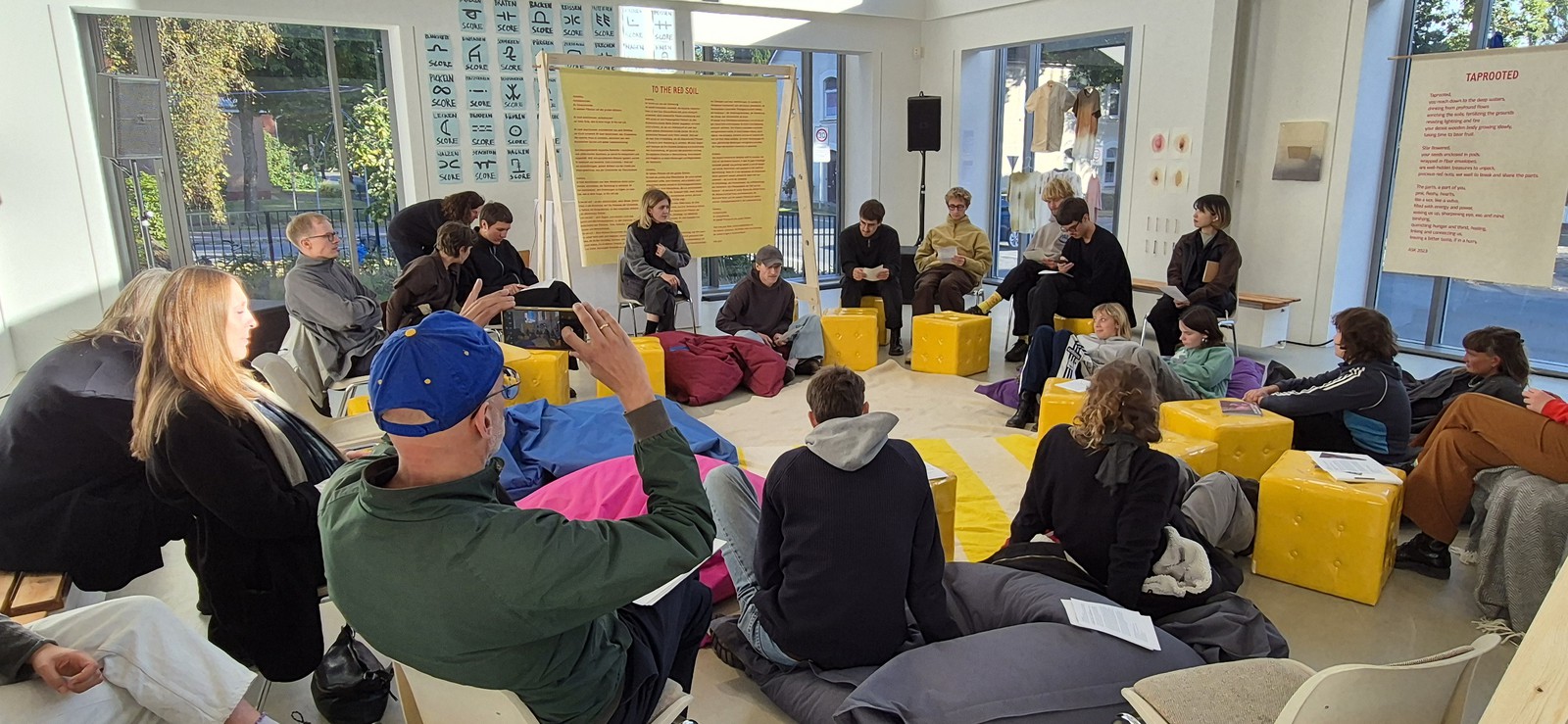
From here, the programme shifted into translocal encounters: Astrid S. Klein presented her project The Power of the Kola – Negotiating the Living, developed with Prof. Dr. Albert Gouaffo from Cameroon. Her narration of a diasporic kola plant returning to its endemic soil unfolded as a poetic meditation on restitution, colonial entanglements, ecological justice and the complex relationships between humans and more-than-human actors. After coffee and cake, participants gathered to listen together to Klein’s one-hour audio composition To the Red Soil. Voices, music and storytelling created a dense sonic landscape of memory and future visions. The act of listening became itself a collective ritual of attention and care.
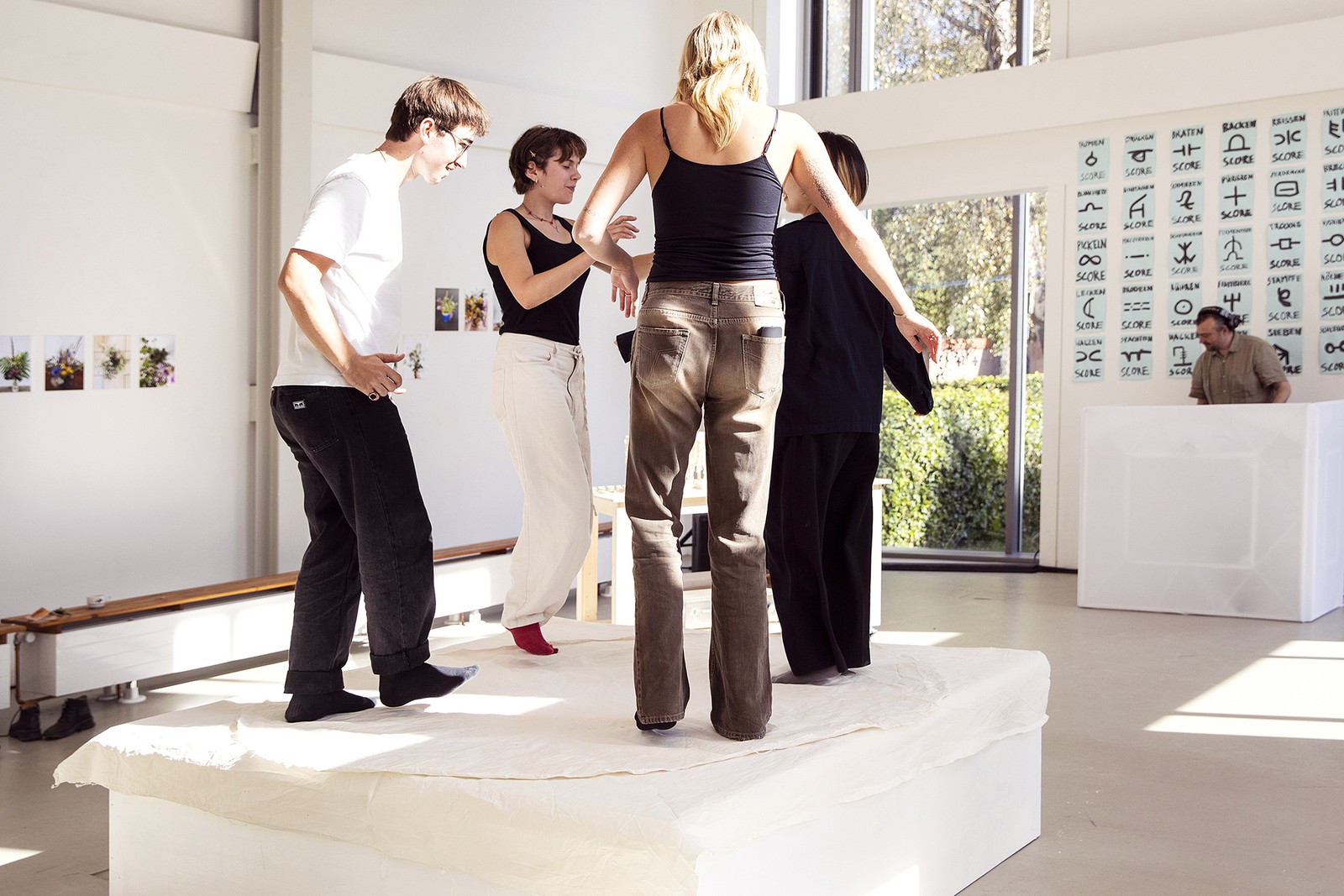
In the evening, the focus shifted to taste and movement: Seraina Grupp together with Tabea Möllgaard activated the Taste Library for exchanges of preserves and recipes, while Byungseo Yoo transformed the exhibition hall into a communal cooking choreography using a performative stage for Go-Go Sourdough Udon Dancing Platform. For this event, we produced Udon noodles in a traditional way by stepping on it – with the help of loud music. Fermentation processes became rhythm, choreography and dialogue – an embodied metaphor for ecological interconnections and collective transformation. The day ended with a late dinner of carefully prepared udon noodles with kimchi, which had been made in a workshop before the gathering.
Day 2: Harvest rituals and oceanic relations
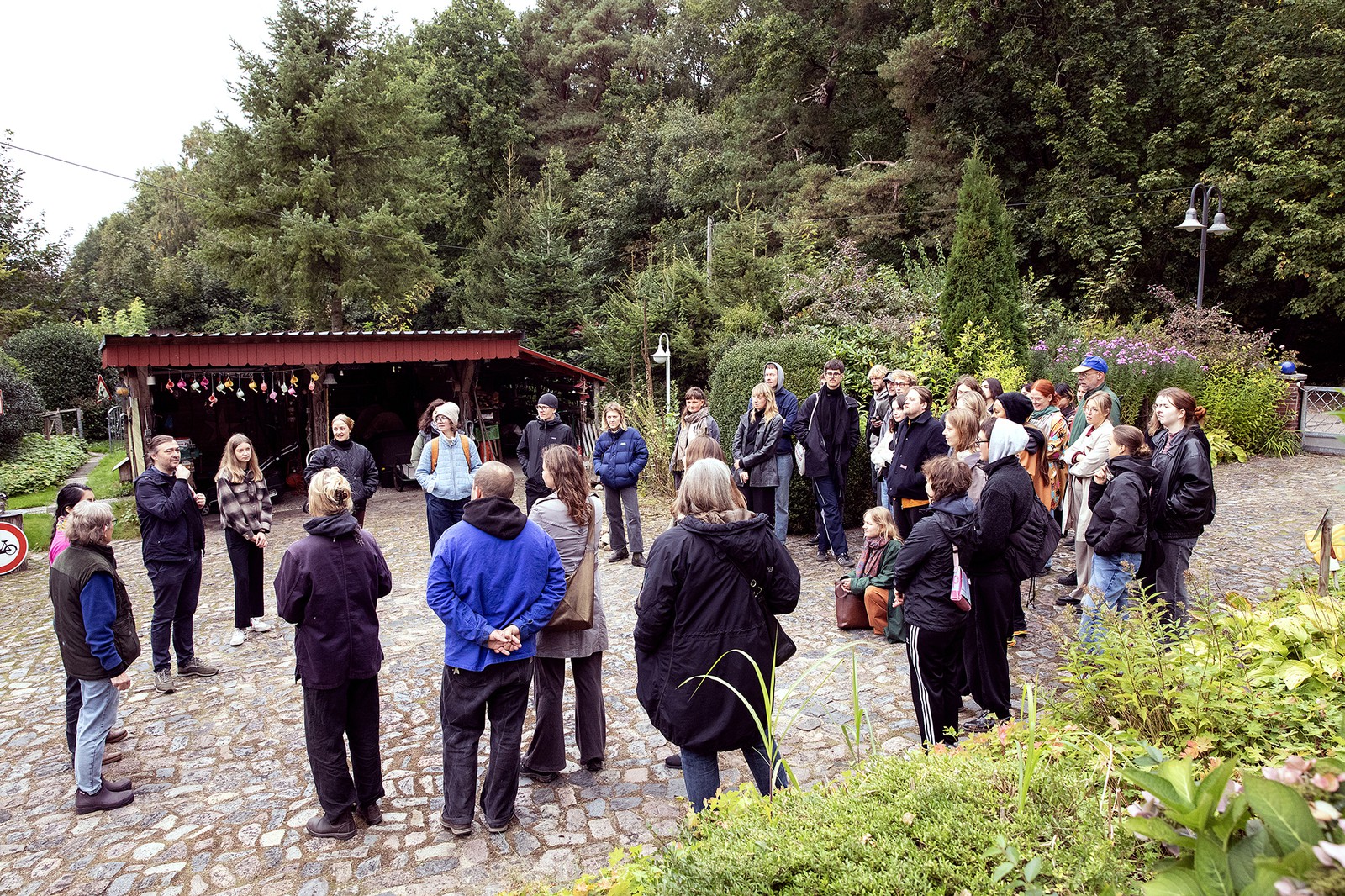
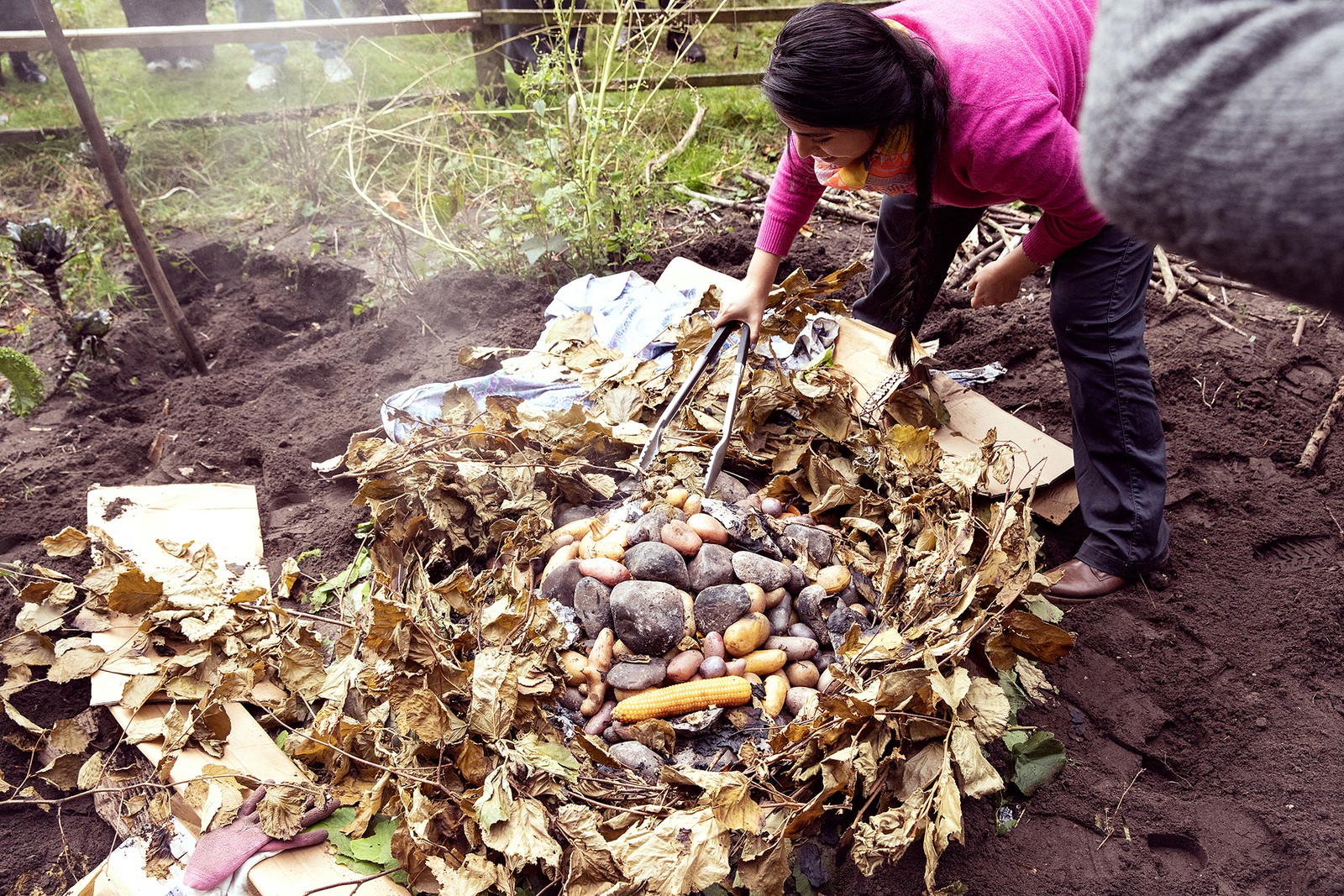
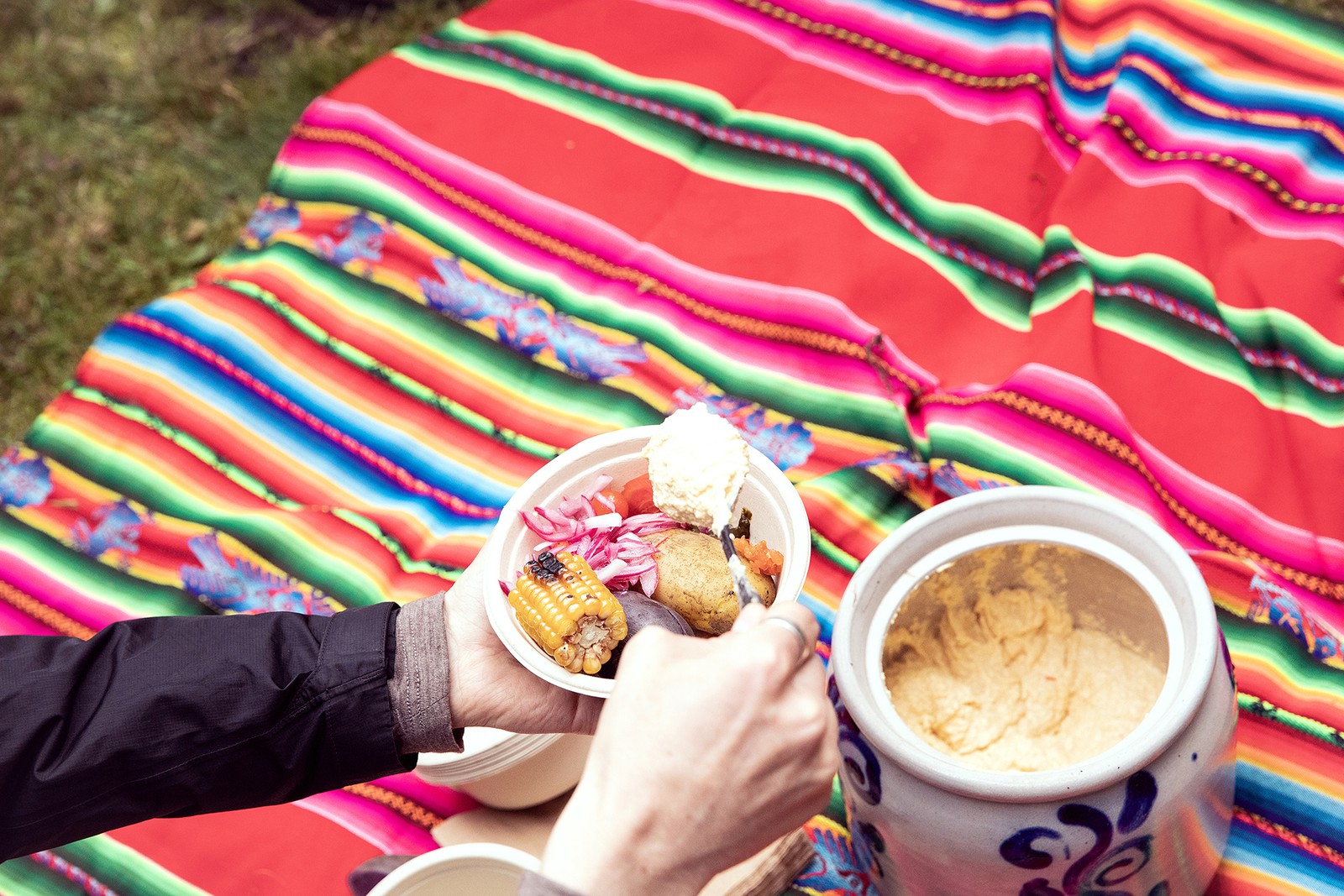
On Saturday, 27 September, the Assembly began with a walk to the garden of Wiebke Habbe, where Daniela Zambrano Almidón led a Pachamanca — a traditional Andean earth-oven preparation of potatoes using hot stones. The stones, sourced from a nearby quarry, evoked the Pleistocene era and its geological transformations, while also pointing to the current extractive activities of mining companies in Schleswig-Holstein, as highlighted by Wiebke Habbe. The ritual reconnected participants with ancestral practices of gratitude, community, and care for the earth. The harvest became a collective act of cultural memory, ecological reflection, and sensory enjoyment.
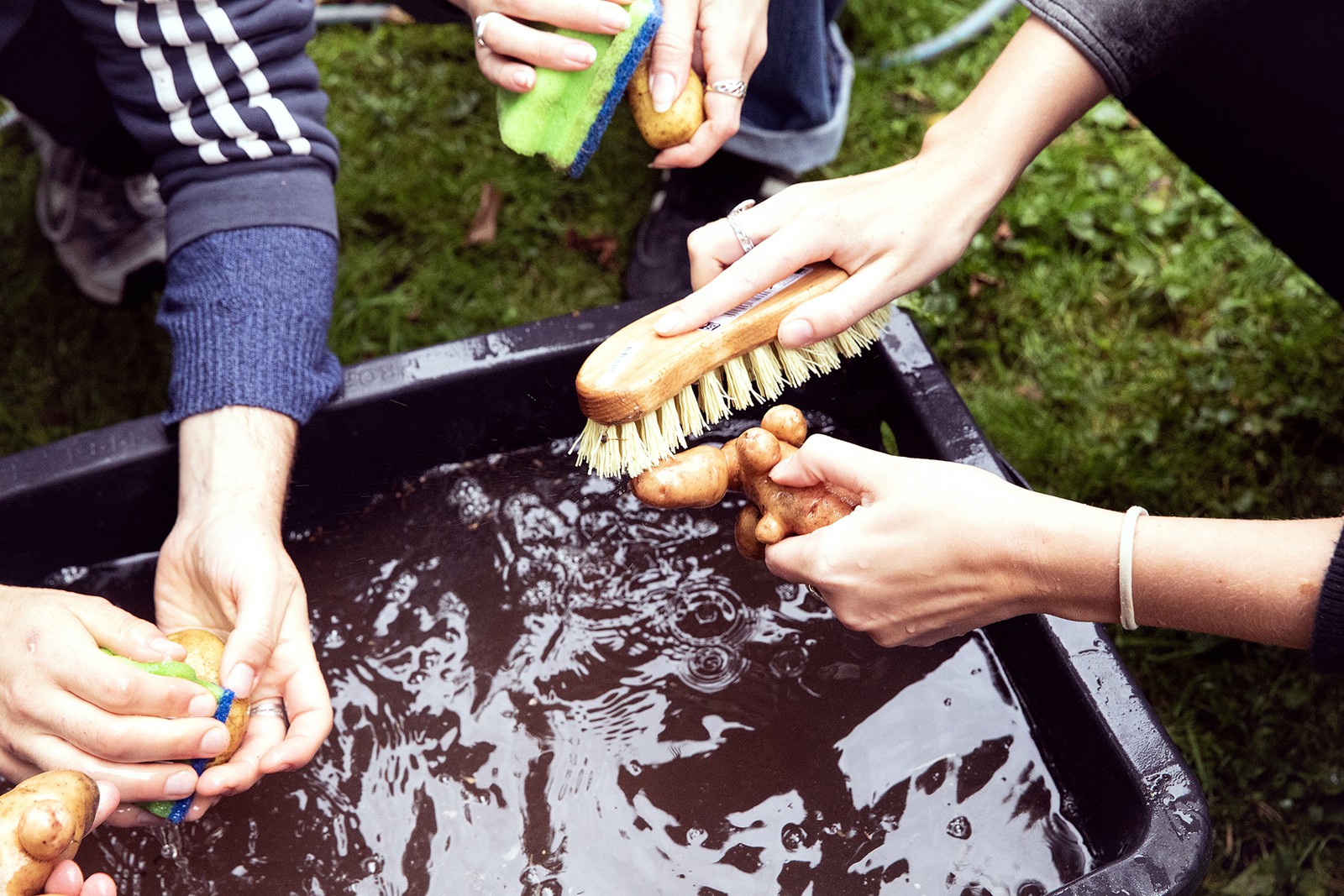
The preparation of the Huatia was a communal endeavor involving many helping hands — from cleaning the stones and potatoes to lighting the fire and constructing the earth oven by layering leaves, covering the hot stones, and sealing them with soil. Once the oven was built, the artist led a ritual moment of thanksgiving to the soil and the ancestors, decorating the mound with a purchased bouquet of flowers. This gesture, however, sparked a moment of tension: Habbe objected to industrially produced flowers being used on her pesticide-free soil, which she had cultivated over many years without chemical agents – a place she had developed into a space of ecological integrity through a long process.
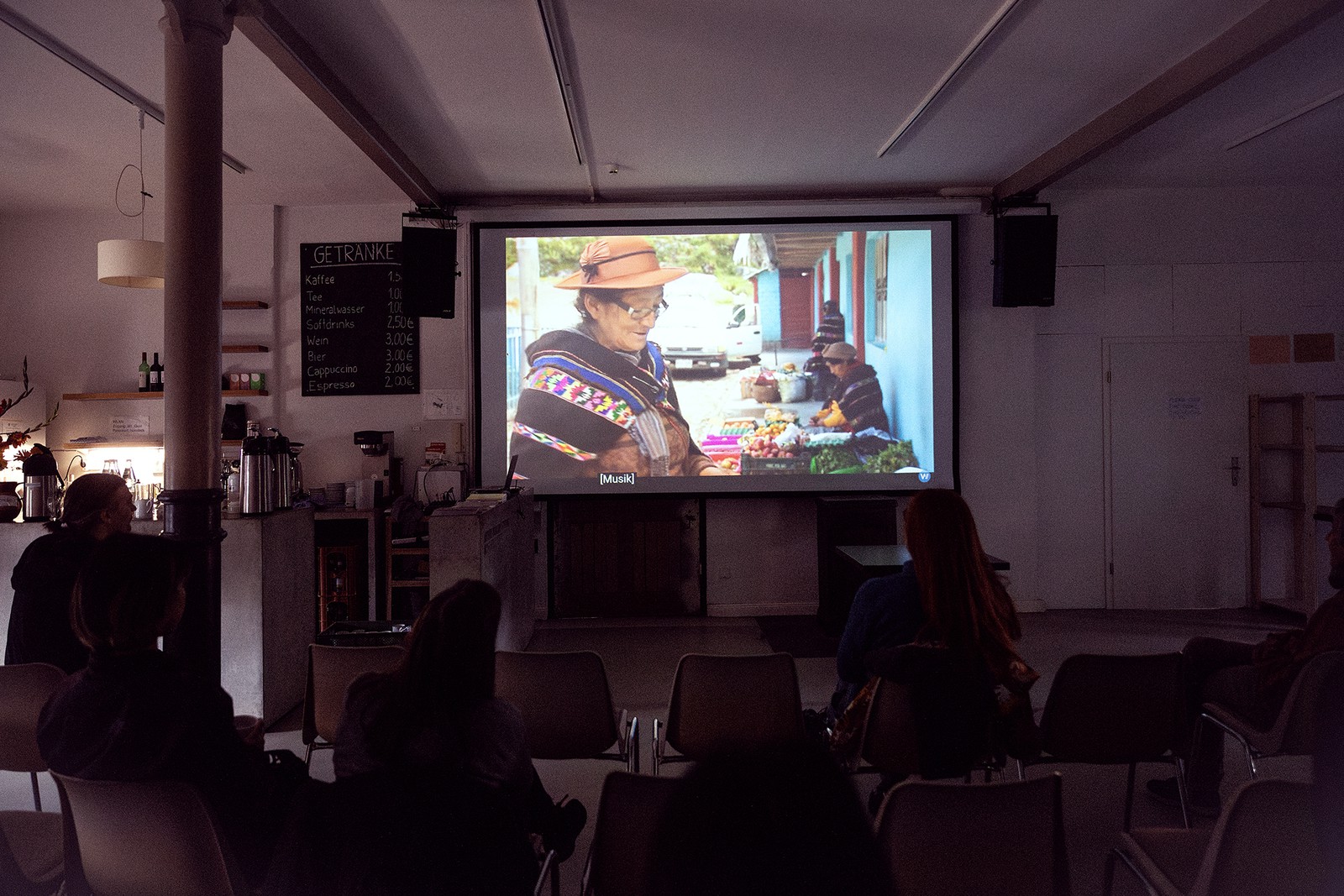
Back at M.1, Erika Harzer presented her documentary film Das Terrassenwunder von Peru, offering insight into millennia-old terraced agricultural systems in the Andes. The screening turned into a moment of reflection on the transmission of agricultural knowledge across time and geography. Specifically the rapid urbanization and economic deevaluation for ecologically sustainable produced food was topic of the discussion.
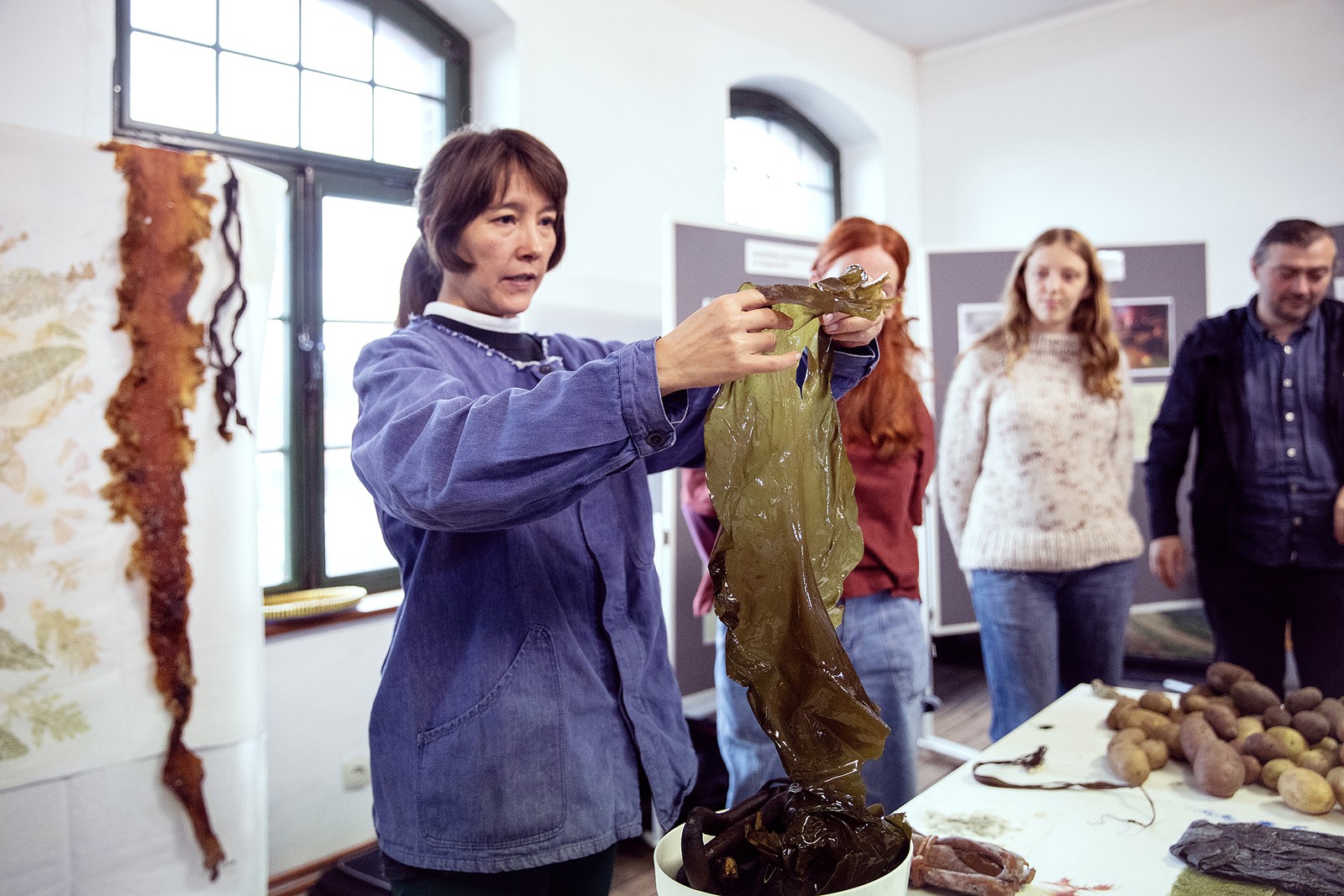
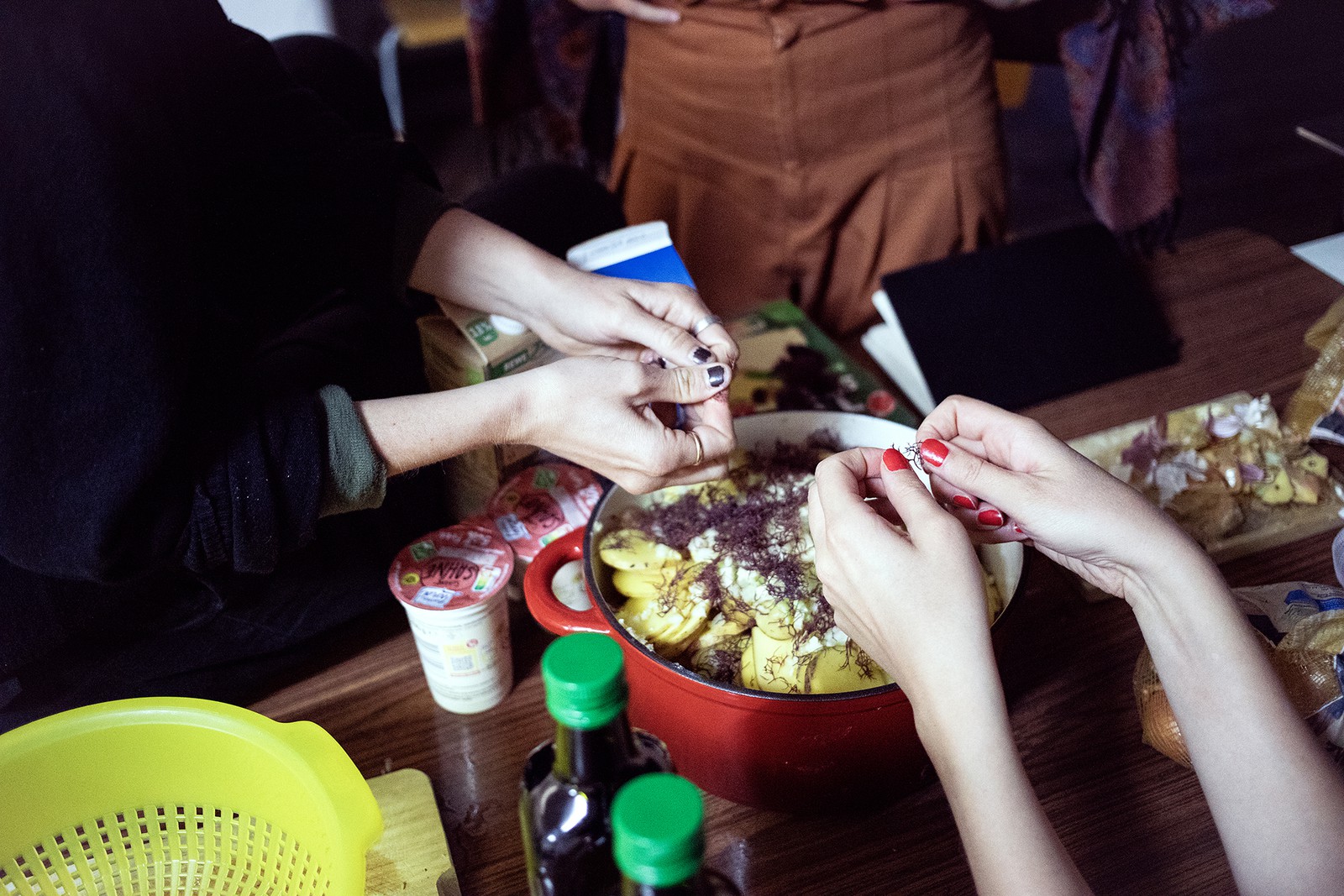
The second half of the day turned towards oceanic food. In a hands-on workshop, Maya Minder introduced algae as both ecological resource and cultural practice, combining cooking with speculative thinking about oceanic futures and our culinary practices. Minder gave insights into algae prodution worldwide and algaes more relevant role in science and global food systems. She brought algae from all over the world to cook with them. Her presentation transitioned into a recipe-making workshop relying on potatos and algae as the main ingredients. Different dishes were prepared in groups, which were shared and tasted by all during dinner.
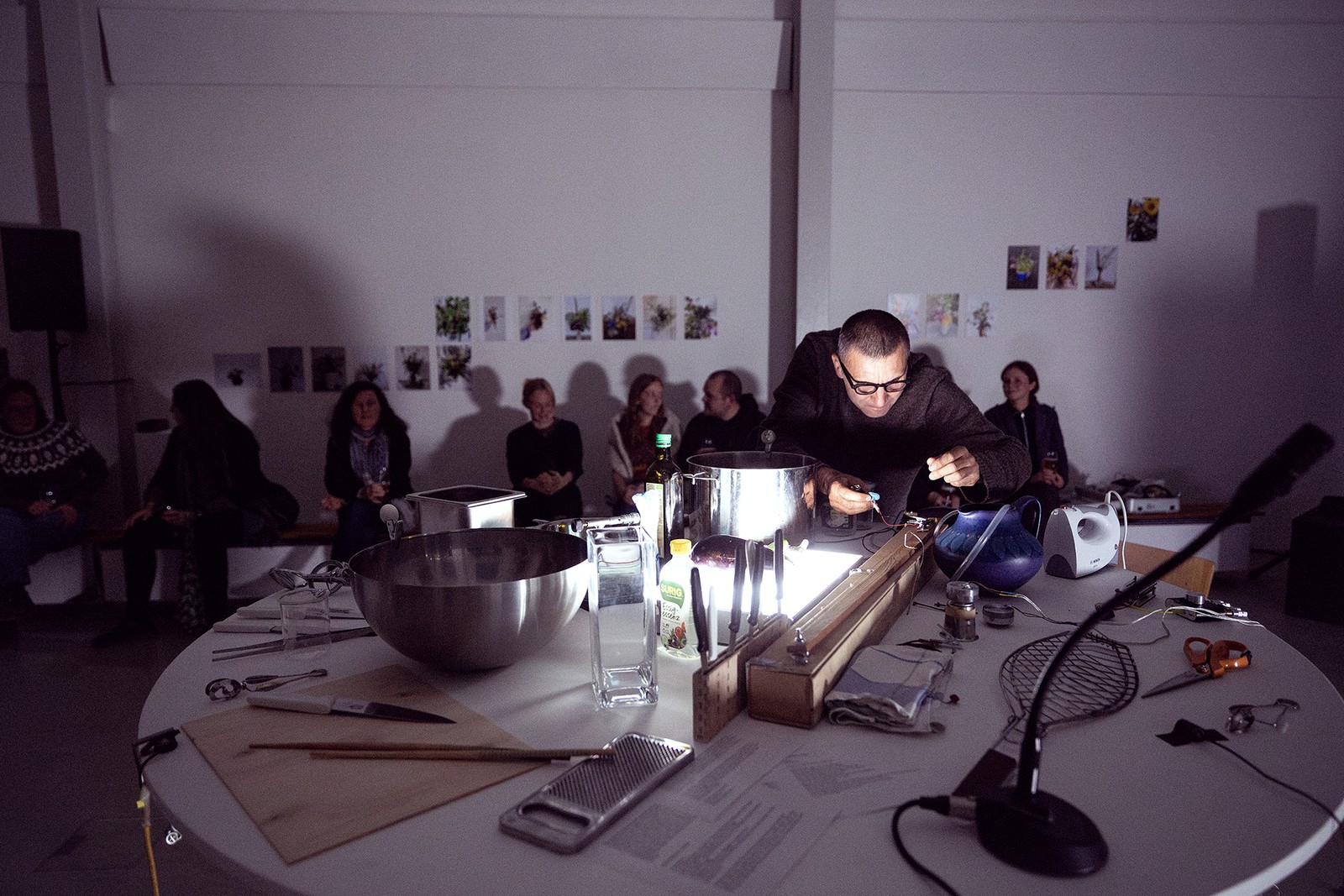
The day culminated in the Sonified Kitchen – a performative collaboration between Minder and sound artist Dominique Leroy. Here, the sounds of chopping, sizzling and fermenting were amplified into a live composition, intertwining culinary gestures, sonic experimentation and collective cooking into an immersive performance. The performance invited to prepare Sotto’Olio – the cooking related actions were transmitted into a sound choreography following the cooking score.
Day 3: Harvest’s mediated in the village festival Pellkartoffeltage
Sunday, 28 September, expanded the Assembly into the public sphere of Hohenlockstedt. At the town’s Pellkartoffeltage (Boiled Potato Days), participants and locals encountered artworks, tasted samples, and learned about the ecological practices behind the Assembly projects – from Grupp’s Taste Library and Zambrano’s earth-oven-cooked Huatia potatoes, to Yoo’s kimchi experiments and Myu Hanaoka ’s upcycling works.
On Sunday, 28 September, the Assembly expanded into the public space of Hohenlockstedt. Participants in the Assembly and visitors to the town festival met at the Pellkartoffeltage (boiled potato days). We brought our results with us and talked about the ecological practices behind the Assembly’s projects and offered tasting samples – from Grupp’s Taste Library and Zambranos’s Pachamanca potatoes baked in an earth oven to Yoos’s kimchi experiments and Myu Hanaoka ’s upcycling work.
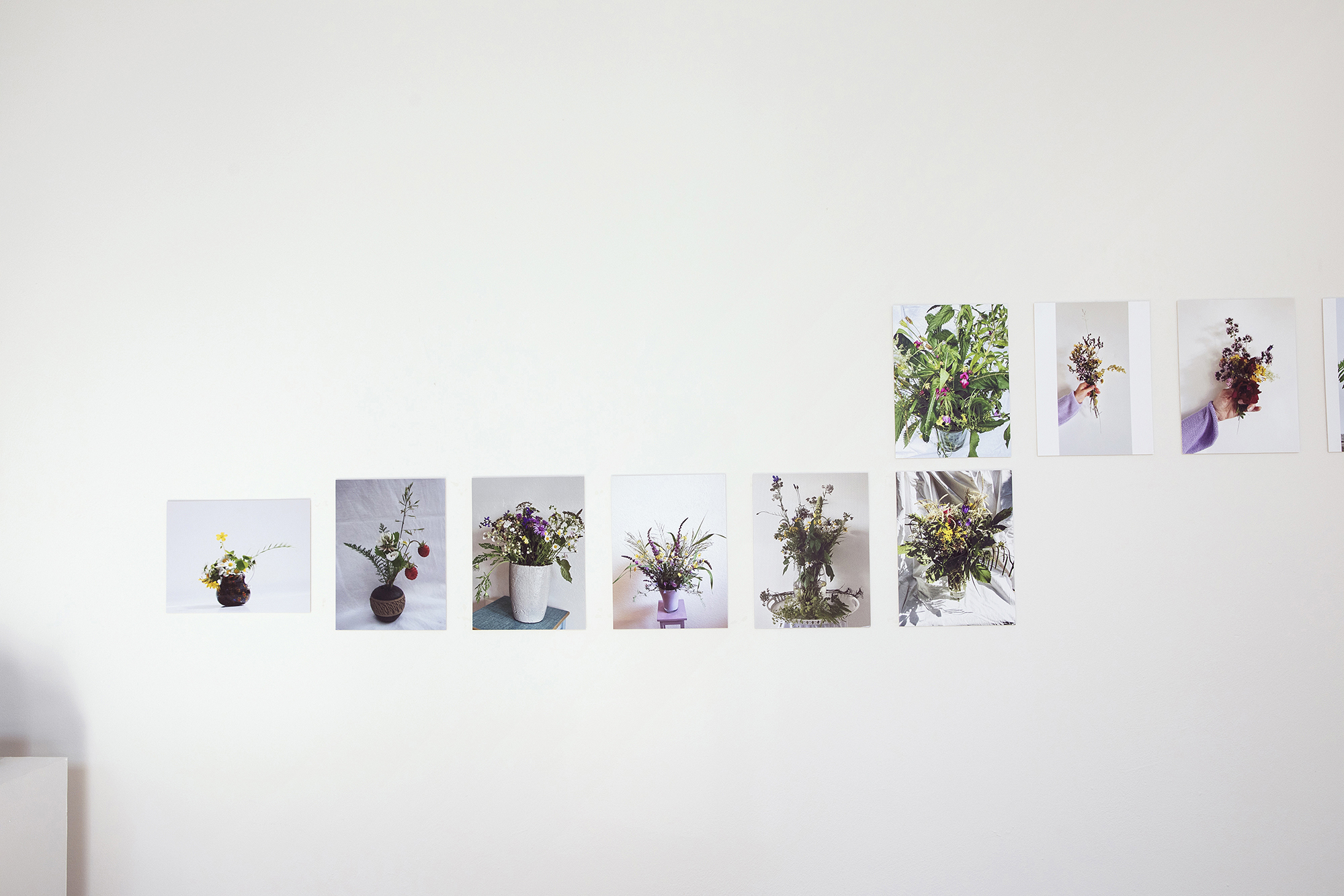
The closing moment took place back at M.1 with the second presentation of The Invisible Garden (Hohenlockstedt). Pictures of bouquets of wild and overlooked plants from summer, created by residents of Hohenlockstedt and neighbouring villages, were displayed. This final act of the Fall Assembly demonstrated once again that ecology as an artistic practice is not about representation but about relation: between humans and plants, traditions and futures, localities and translocalities, harvests and new growth.