Ronald Kolb
Post-Exhibitionary Practice
Swiss Special Program at the Gwangju Biennale
October 2024
Co-curator
Gwangju Biennale
https://gwangjubiennale.org/en/Board/11820/detailView.do
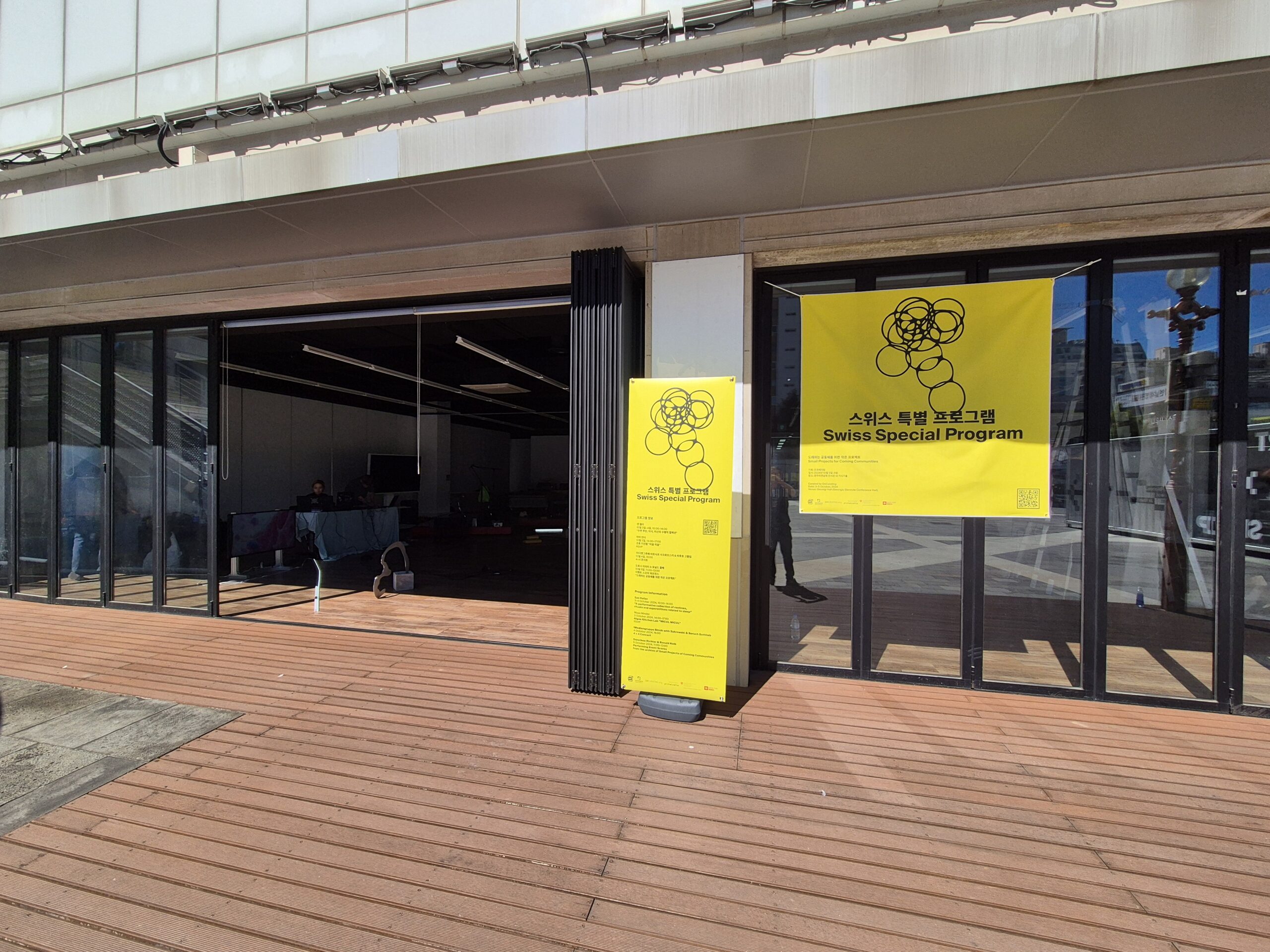
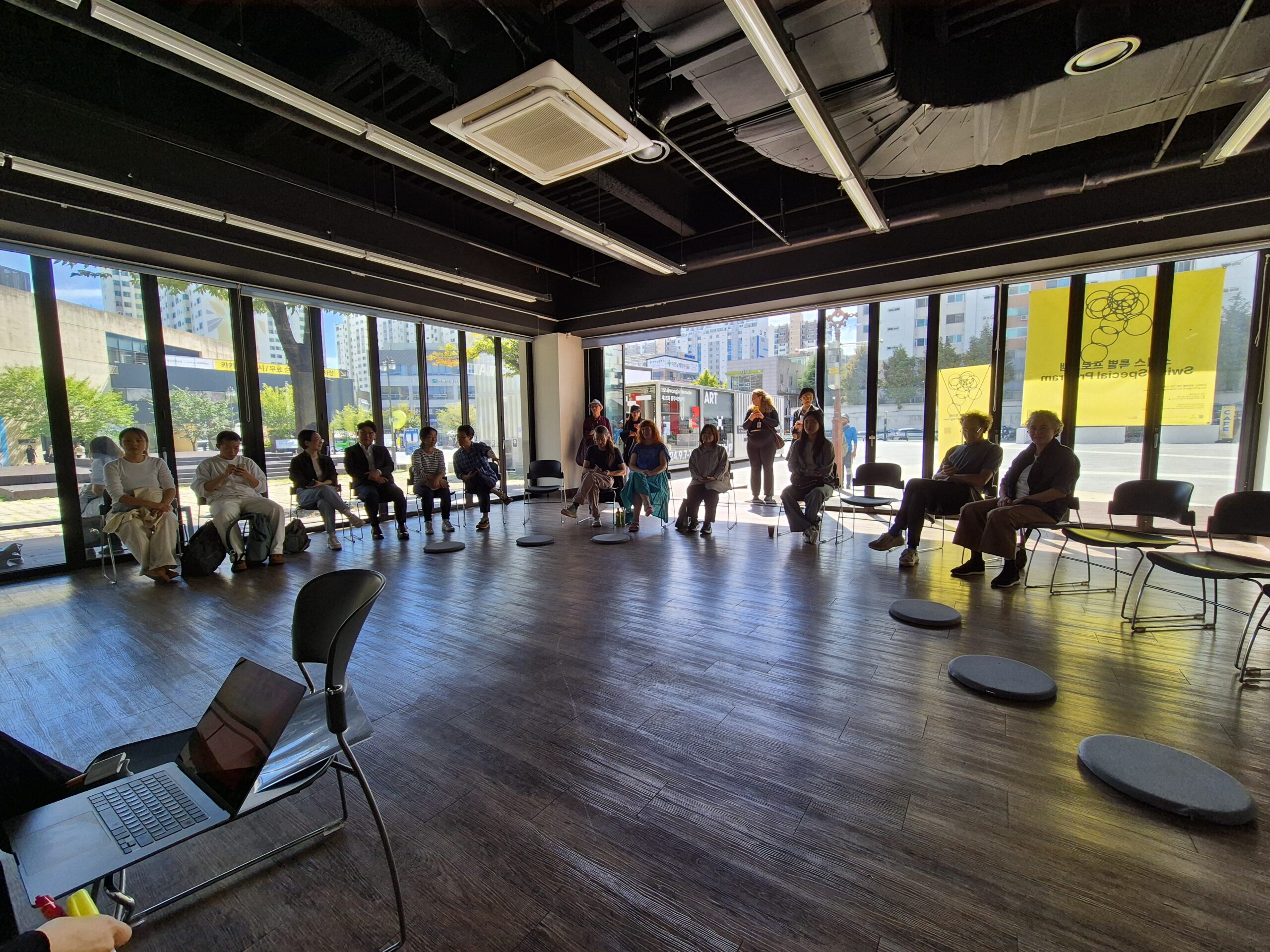
Participatory programme presented the Swiss Special Program for the Gwangju Biennale 2024 at Geosigi Hall, Gwangju, South Korea, 3–5 October 2024.
Curated by Ronald Kolb and Dorothee Richter.
Supported by Pro Helvetia & Embassy of Switzerland in the Republic of Korea.
With Maya Minder, !Mediengruppe Bitnik with Sakrowski and Baruch Gottlieb, and San Keller.
The Swiss Special Program for the Gwangju Biennale 2024 orchestrates immersive participatory experiences featuring San Keller, Maya Minder, !Mediengruppe Bitnik and the “Small Projects for Coming Communities”. Our three-day program is based on the artistic notation of scores to nurture transcultural discourse and transversal exchange with the audience and diverse communities. We use scores, known from music, poetry and visual arts – such as the “Event Scores” of Fluxus – as a guide or instruction for the realization and interpretation of activities that bring art, artists and its audience in a new relationsip in an active participatory way. The audience of the Gwangju Biennale will be our communities.
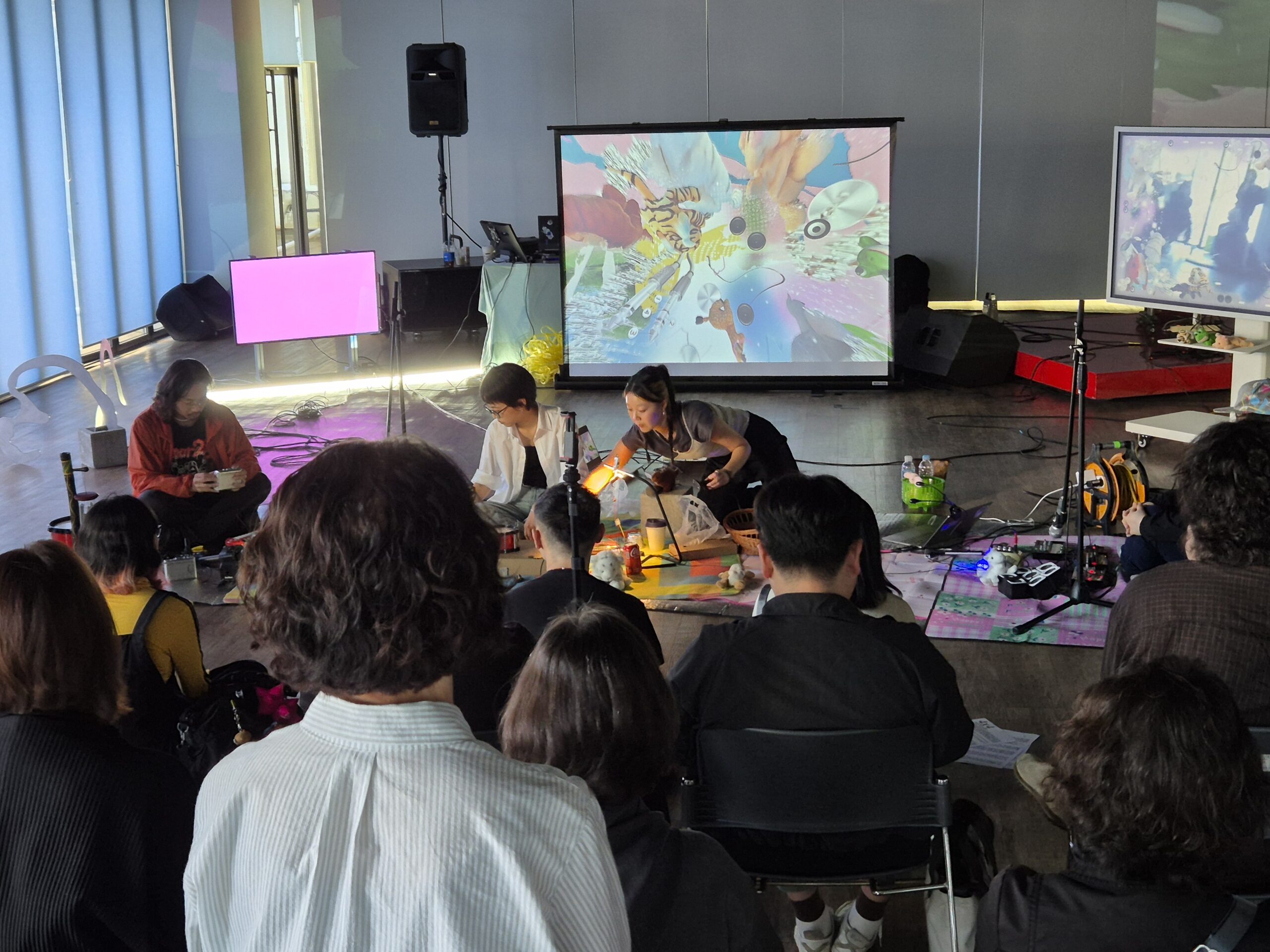
The programme consists of a series of performative workshops over three days (3–5 October 2024): Maya Minder will host an all-day KitchenLab, experimenting with molecular transformation through culinary arts. San Keller’s participatory walk performance invites the public to engage critically and self-reflectively with the urban tapestry of Gwangju, utilizing the Biennale as its backdrop. !Mediengruppe Bitnik is organizing a concert with new band collaborations based on a workshop with 16 artists, creating 4 bands with their “4 x 4 random band generator”. The events will be framed by the “Small Projects for Coming Communities” – an ongoing research, workshop and exhibition project that aims to establish temporary and open community formations in a playful, artistic and performative way to create a space for negotiation and exchange, a contact zone. It houses a collection of scores that are activated and expanded with each exhibition.
Maya Minder
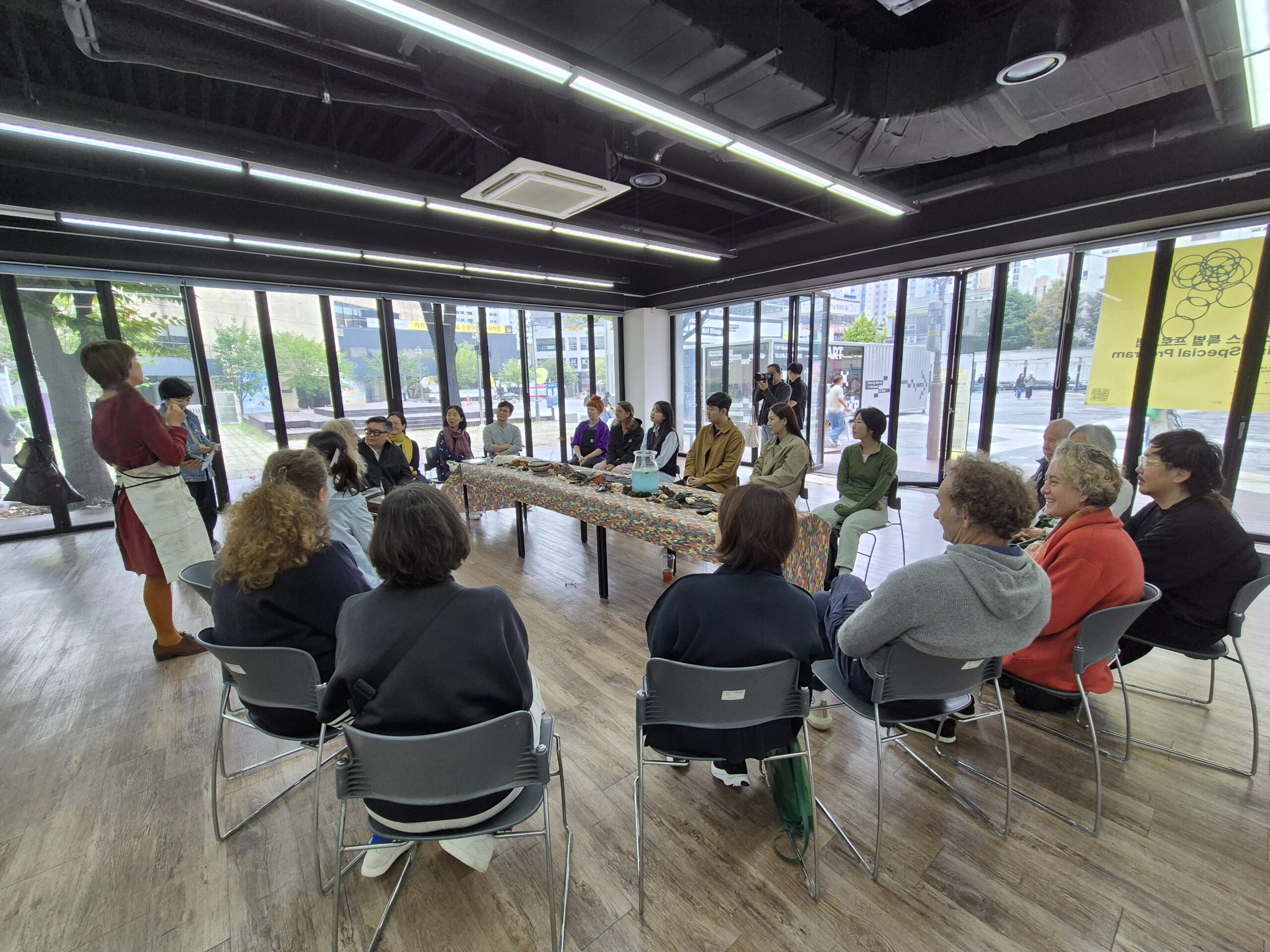
Algae Kitchen Lab “MICUL MICUL” at Gwangju Biennale 2024
3 October 2024
The “Kitchen Lab” experiments on questions of molecular transformation through the culinary with transdisciplinary practices of new media, performance, fermentation and cooking. “Cooking therefore transforms us” is the starting point of the practice of Maya Minder which performs on the entanglements of food, technology & science and ecology. The act of eating (together) actualizes the interdependent infrastructure with the desires towards careful transformation and scientific progress in line of Lynn Margulis’ evolutionary biology. The Kitchen Lab in Gwangju will explore the potential of algae & seaweed and aims to create new recipes together with the participants of the workshop/performance.
!Mediengruppe Bitnik
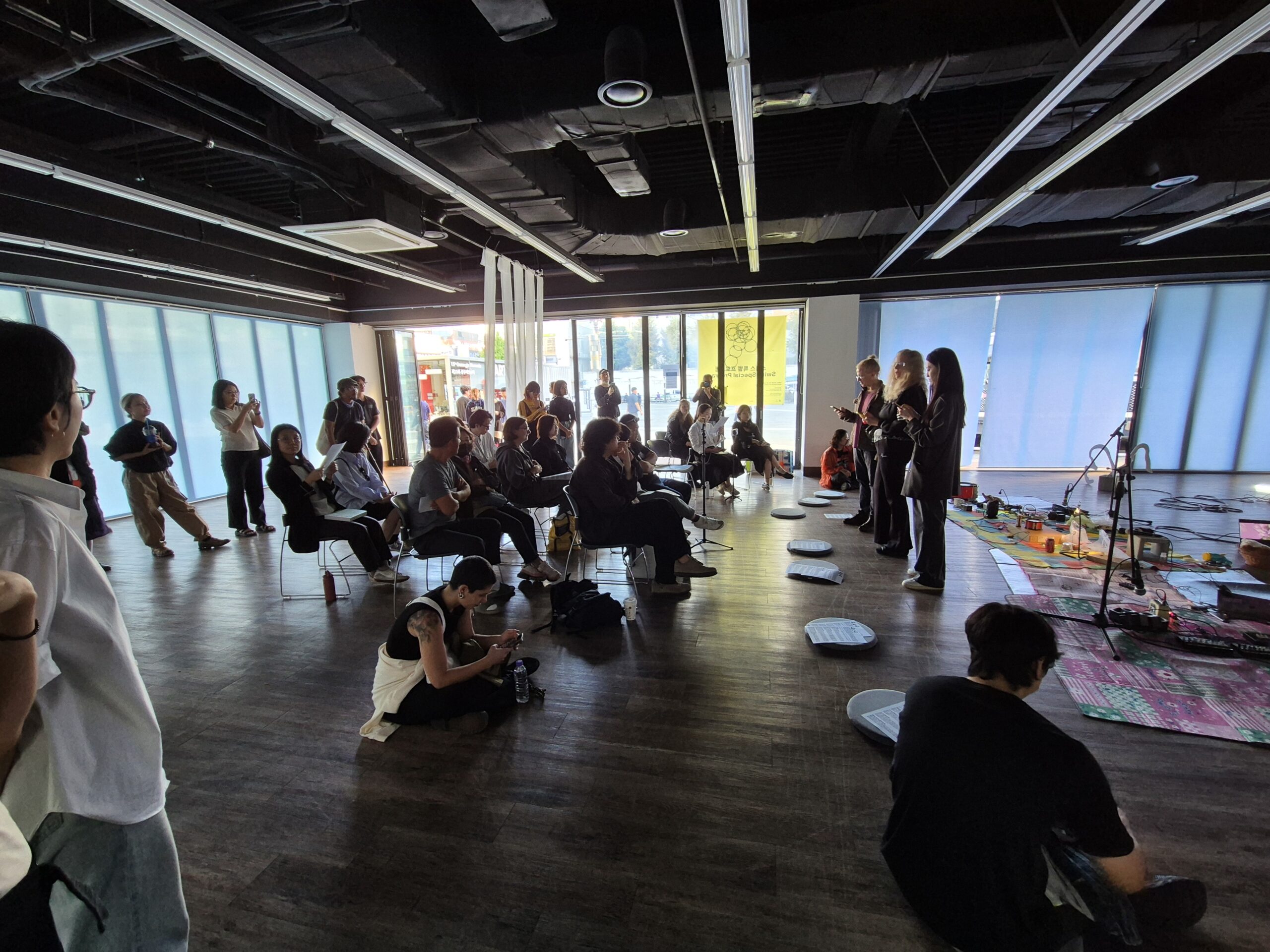
4 x 4 Gwangju edition
4 October 2024 (evening)
At the Gwangju Biennale, !Mediengruppe Bitnik invites various artists for the 4 x 4 Random Generator. The artists will form new collaborations on the first day and perform live a few days later. By utilising chance, 4 x 4 encourages non-competitive artistic collaborations and pushes the individual artists to leave their comfort zone. The project combines art, media art, music and performing arts across all genres and disciplines. This mixture breaks down boundaries and can lead to friction, but also favours solidarity and new forms of production. The result is a temporary, permeable community of artists that culminates in a public concert.
San Keller
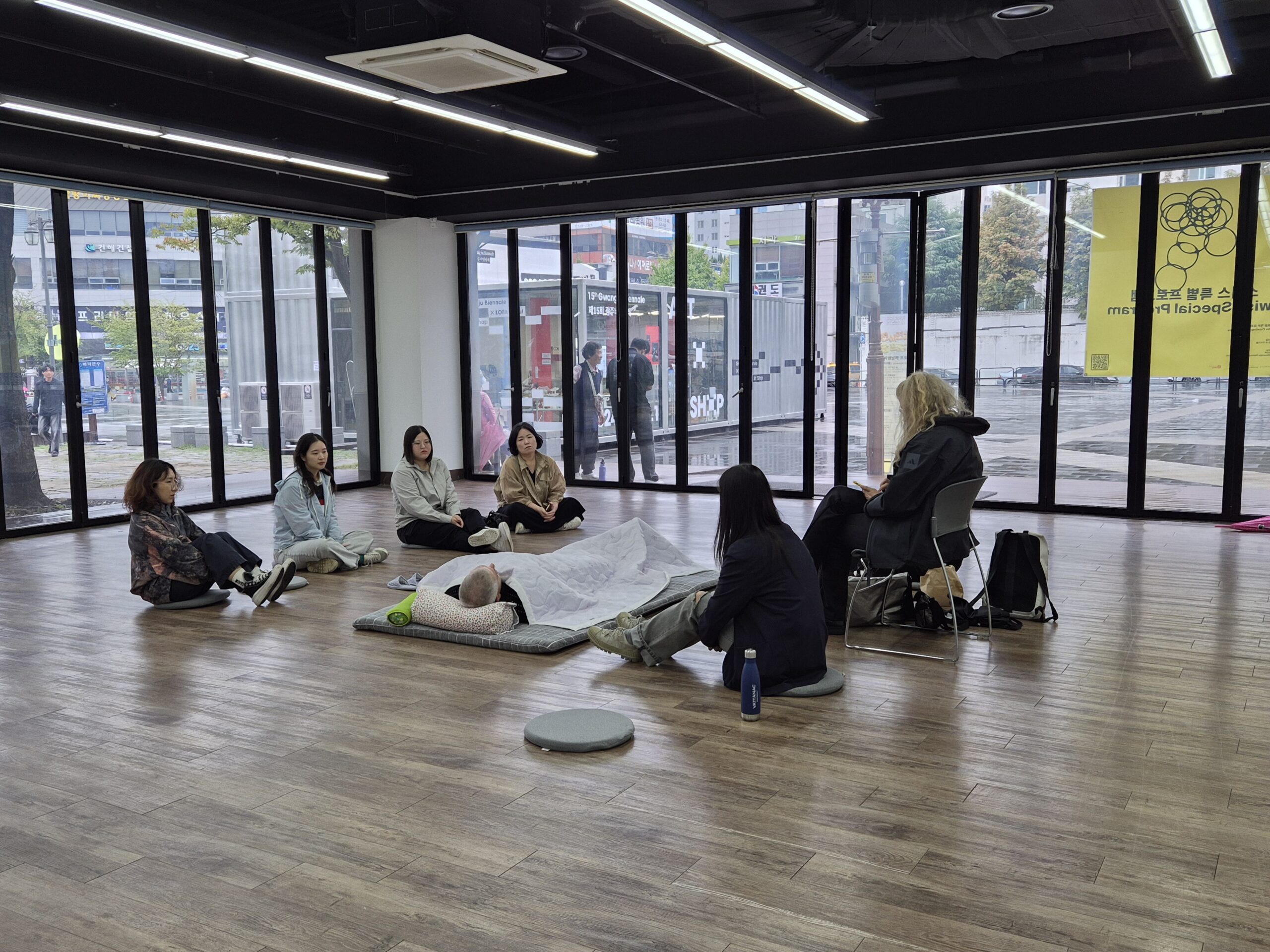
“The Walk” at Gwangju Biennale 2024
5 October 2024
‘The Walk at Gwangju Biennale 2024’ is a participatory performance by San Keller that invites interested participants to engage in a critical and self-reflective dialogue. This participatory experience unfolds in the urban fabric of Gwangju, using the Biennale as a backdrop. Before the event, specific guidelines are given that determine the course of ‘The Walk’. Keller’s performance utilises the dynamic intersection between local residents and Biennale public to facilitate unexpected and unscripted chance encounters. In these shared moments, personal and global perspectives intertwine, offering unexpected opportunities for reflection and connection.