Ronald Kolb
Post-Exhibitionary Practice
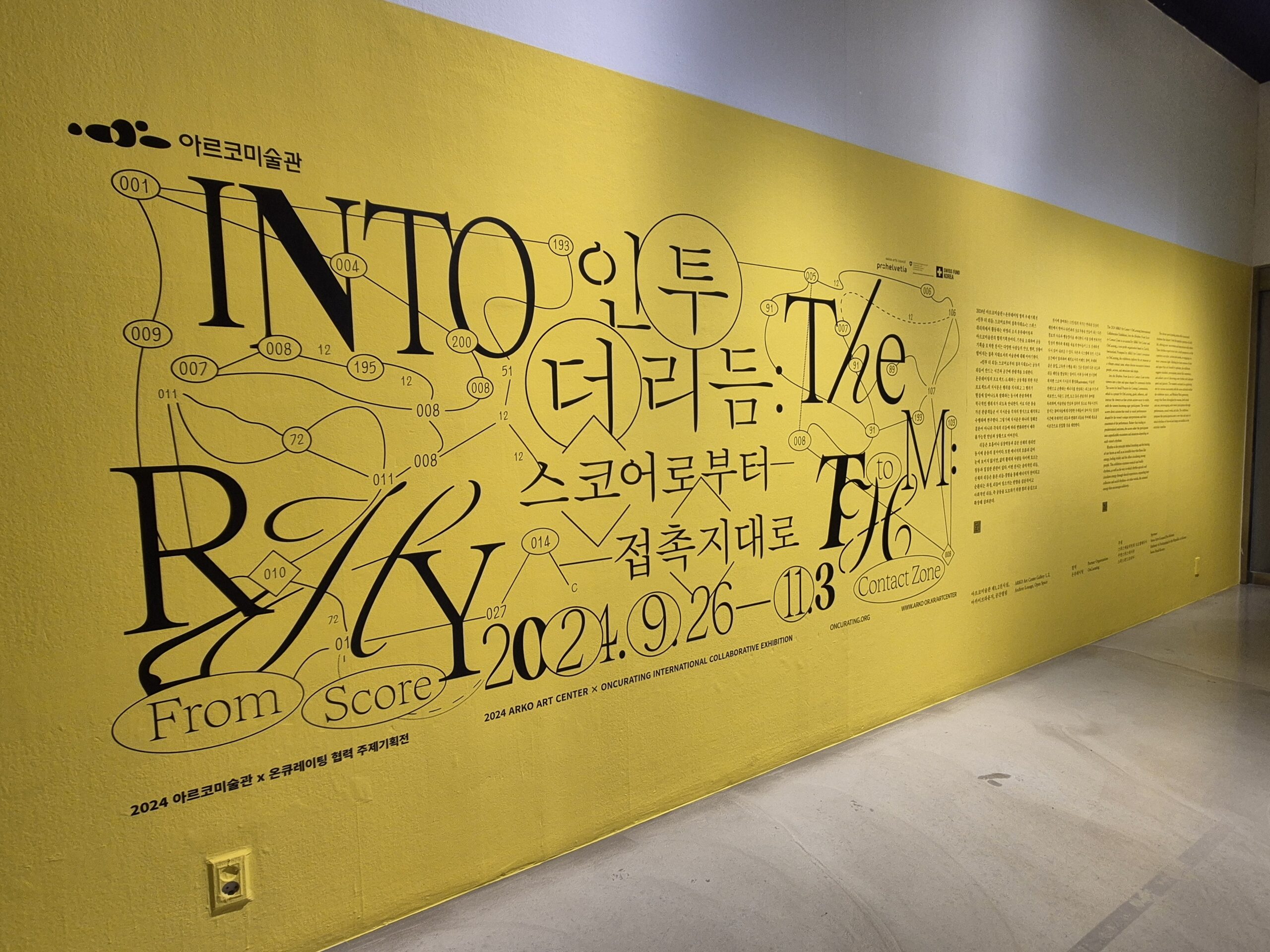
Into the Rhythm: From Score to Contact Zone
September–November 2024
Co-curator
Arko Art Center, Seoul
https://www.e-flux.com/announcements/589829/into-the-rhythm-from-score-to-contact-zone
Translocal exhibition project on participatory and performative art practices
ARKO Art Center, Seoul, 26 September–3 November 2024.
Developed and curated by ARKO Art Center—Jade Keunhye Lim (General Director), Haena Noh (Curator) & OnCurating —Dorothee Richter (Curator), Ronald Kolb (Curator)
Participating artists: Maya Minder, !Mediengruppe Bitnik, San Keller, Sohn Younwon, Stirnimann-Stojanovic, Yagwang, Yo Daham, Tangerine Collective, Paloma Ayala, Elisabeth Eberle.
Collaborations: Green Recipe Lab, Re#sister Korea, Louise the Women, art parenting social club, Piece of Peace, Baruch Gottlieb & Sakrowski, Eunbeen Ha, jongdarjung.
Hosted by Arts Council Korea
With kind support by Swiss Arts Council Pro Helvetia, Embassy of Switzerland in the Republic of Korea, Swiss Fund Korea.
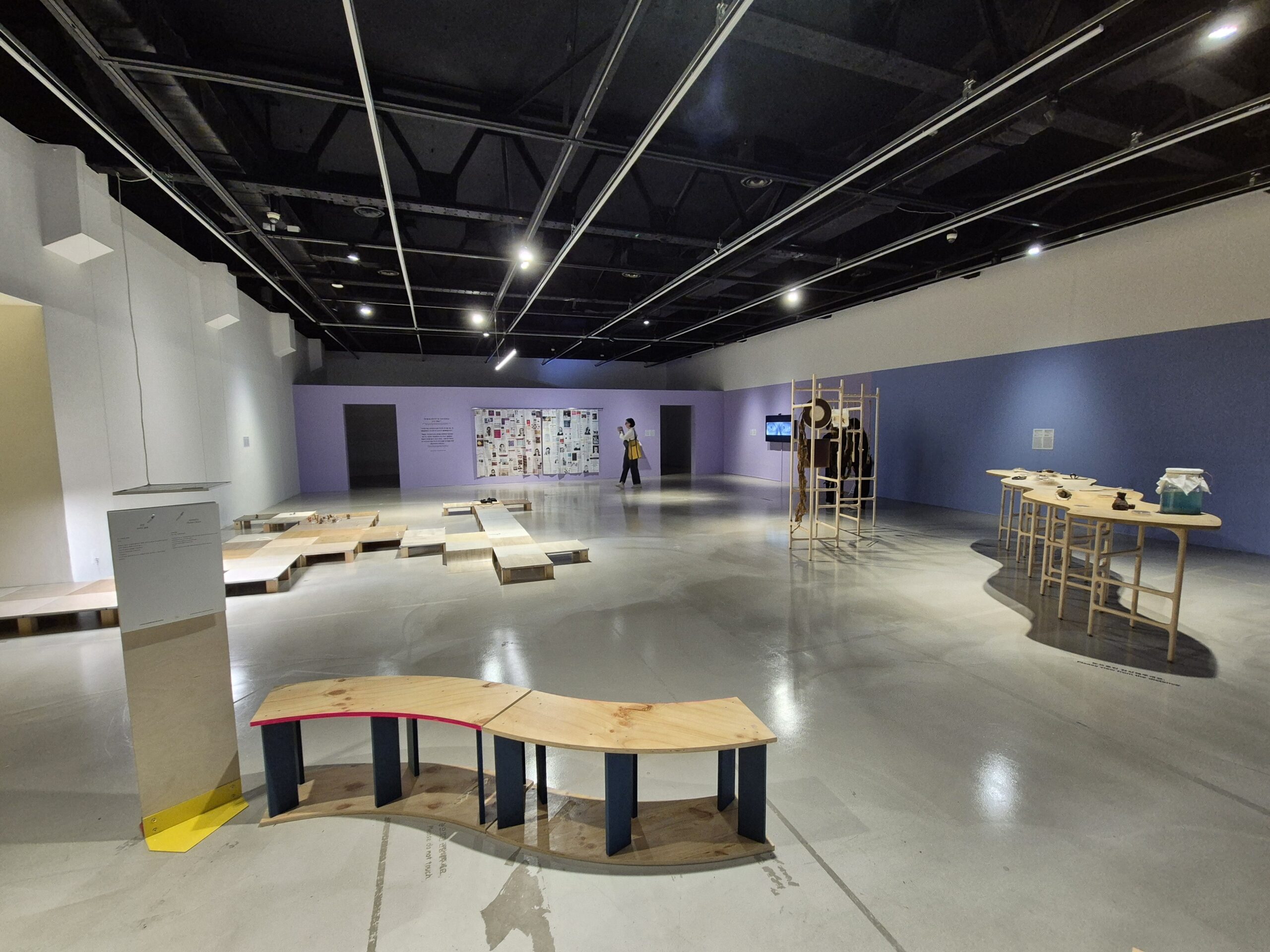
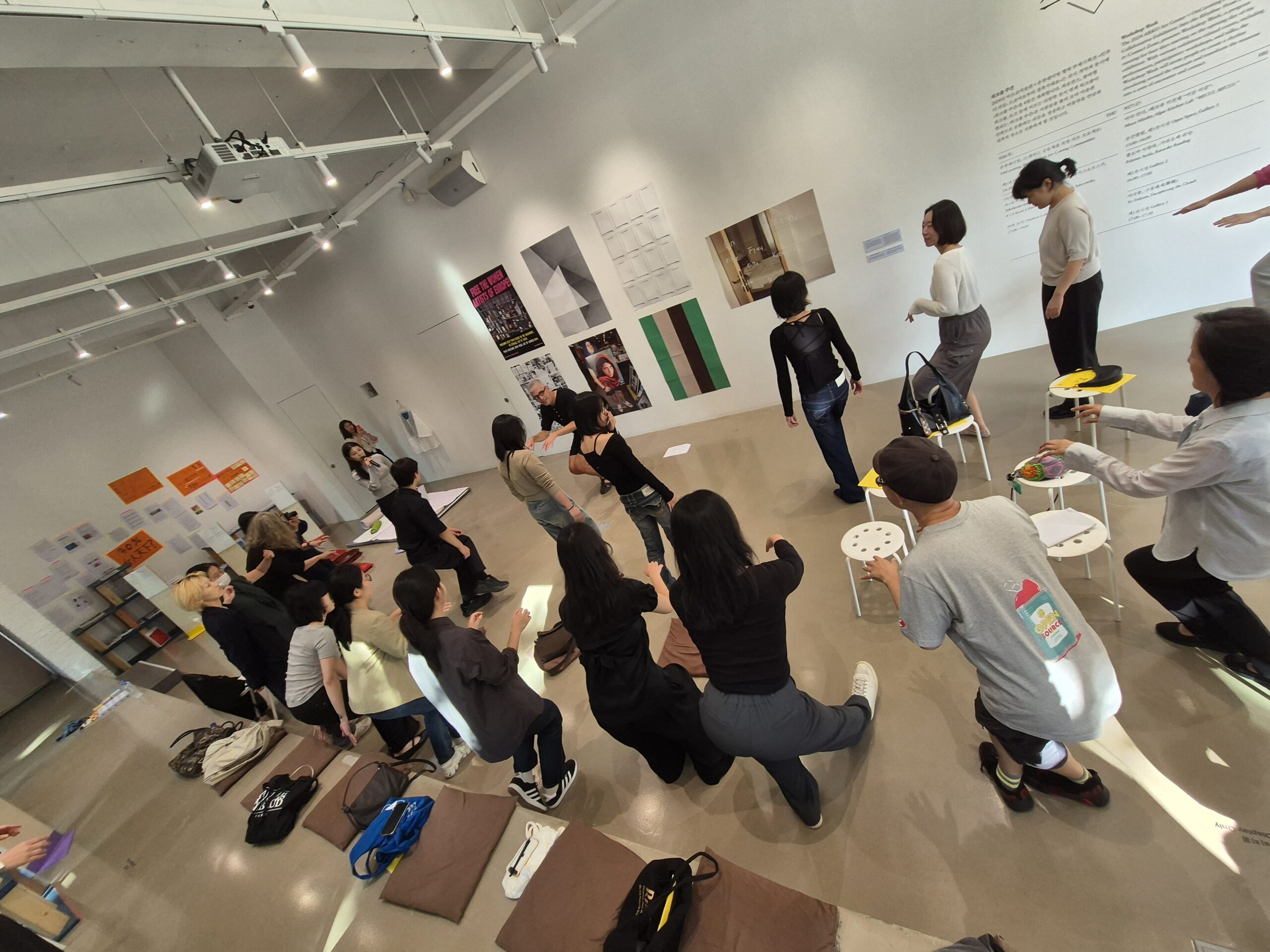
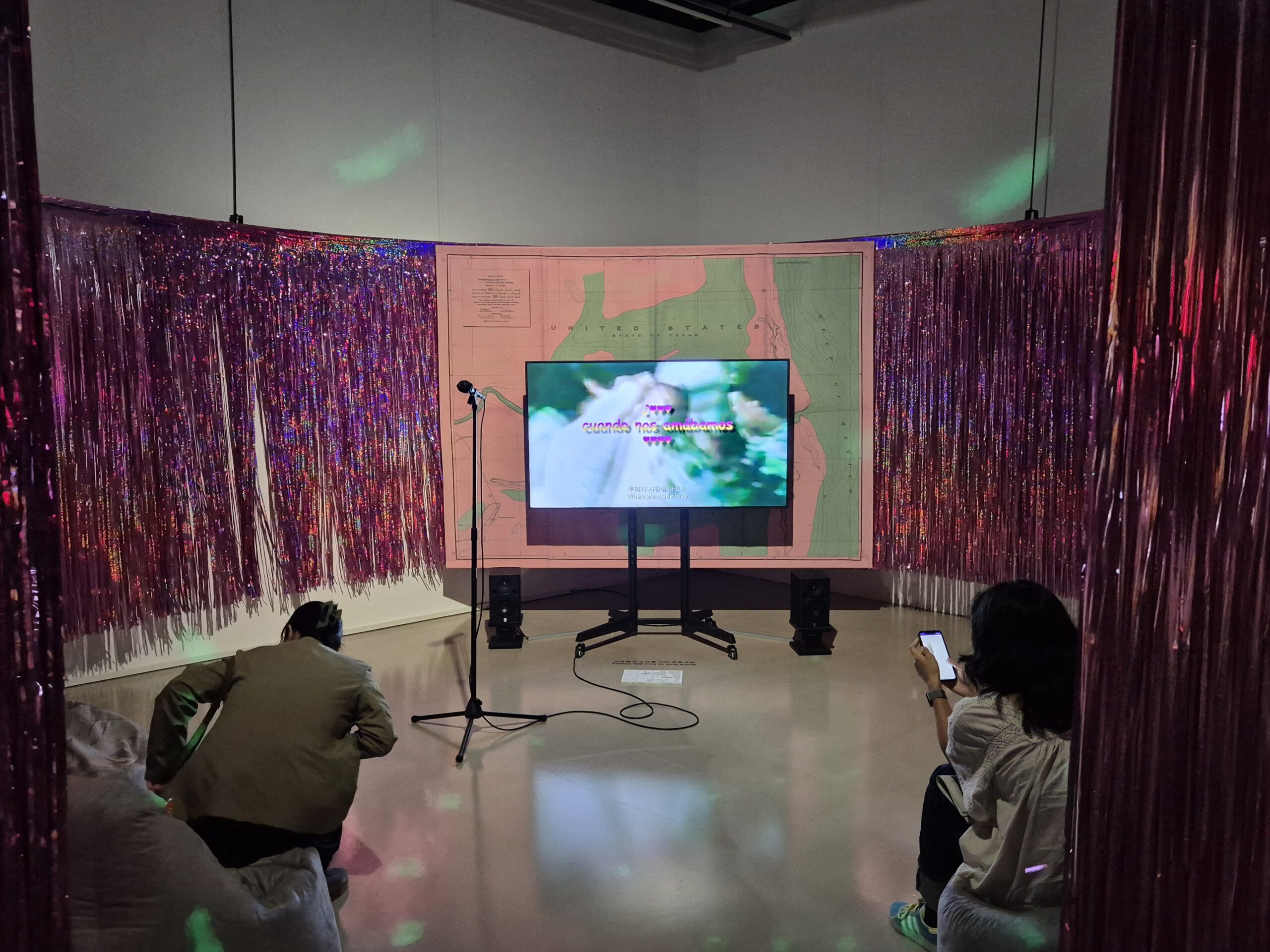
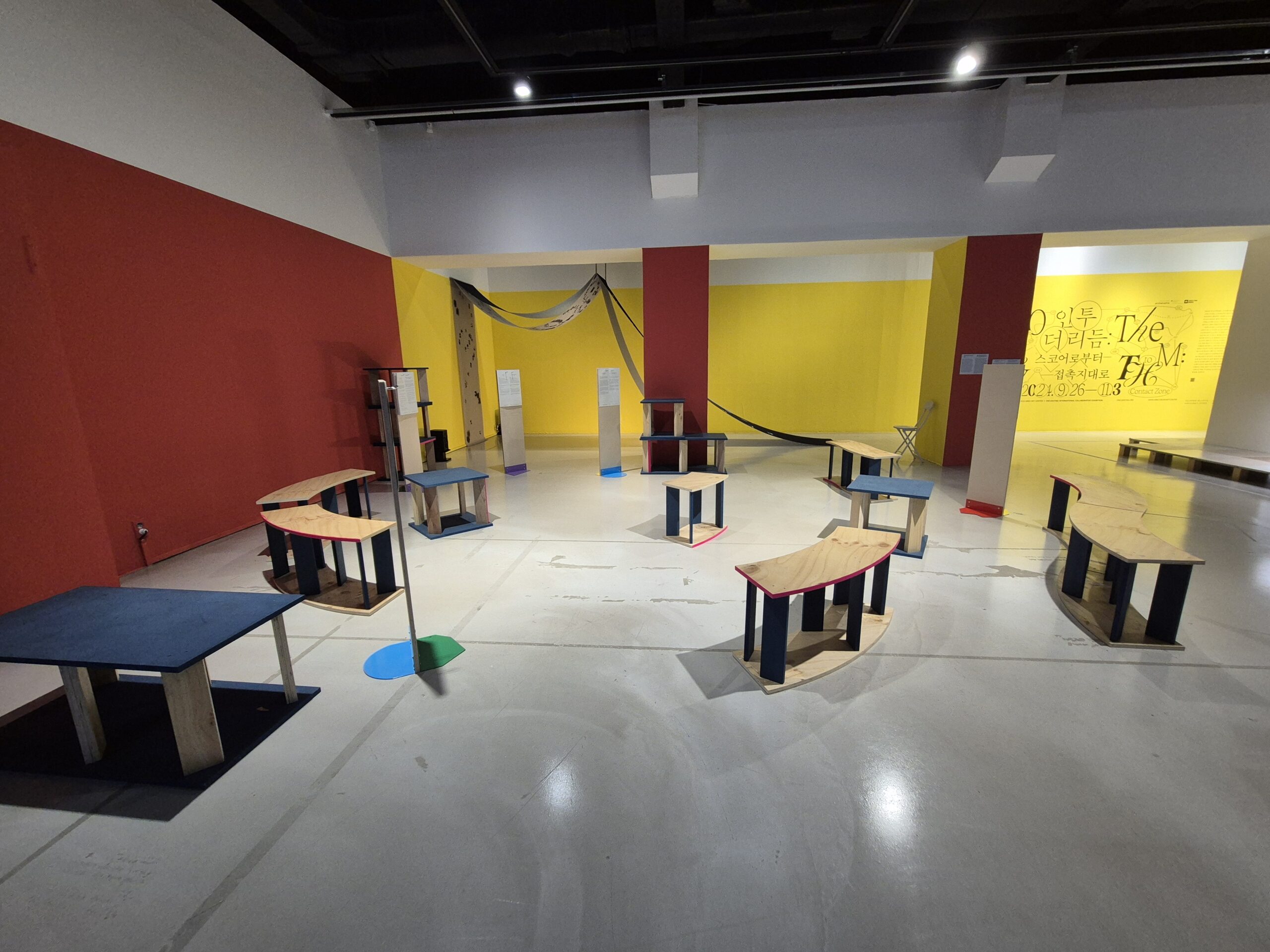
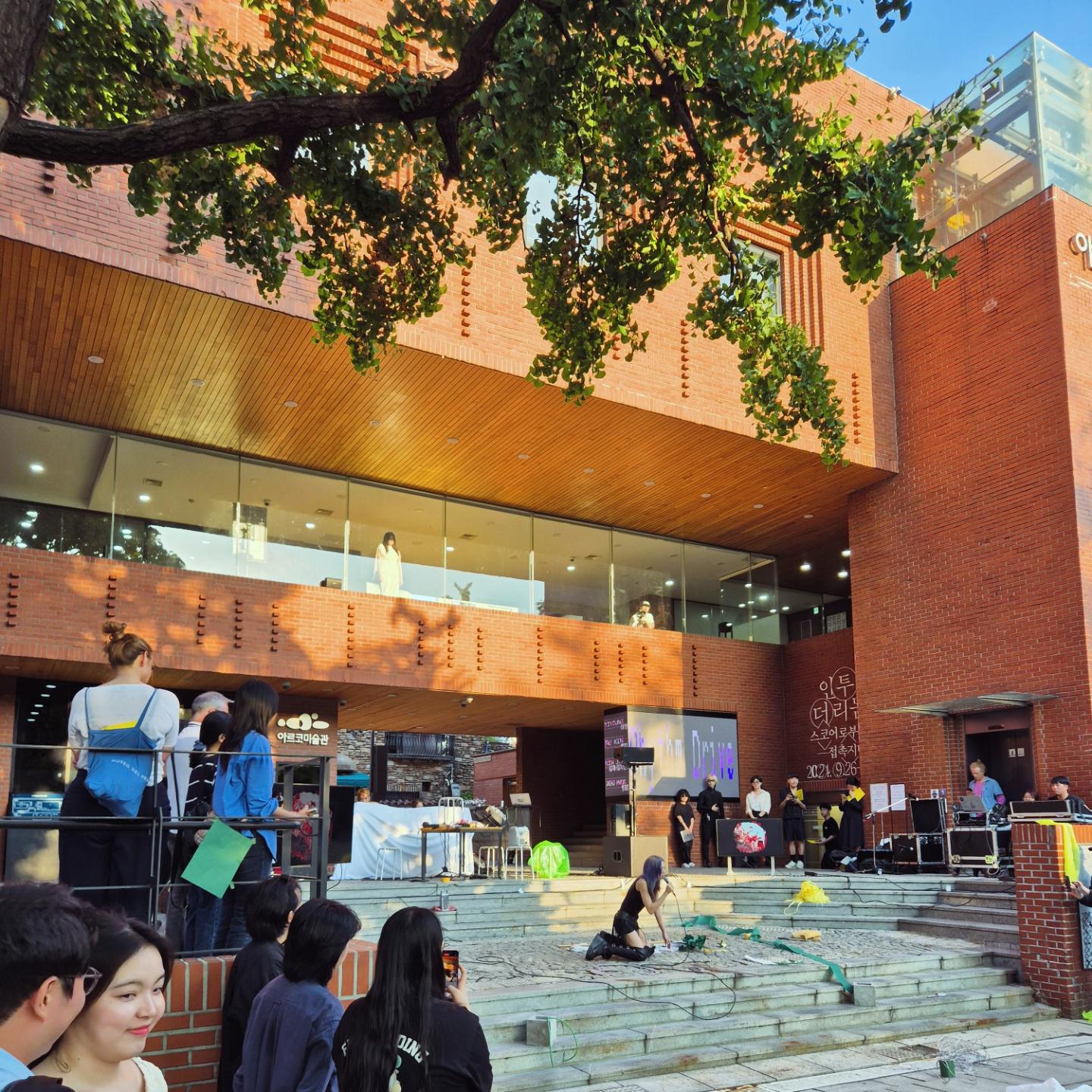
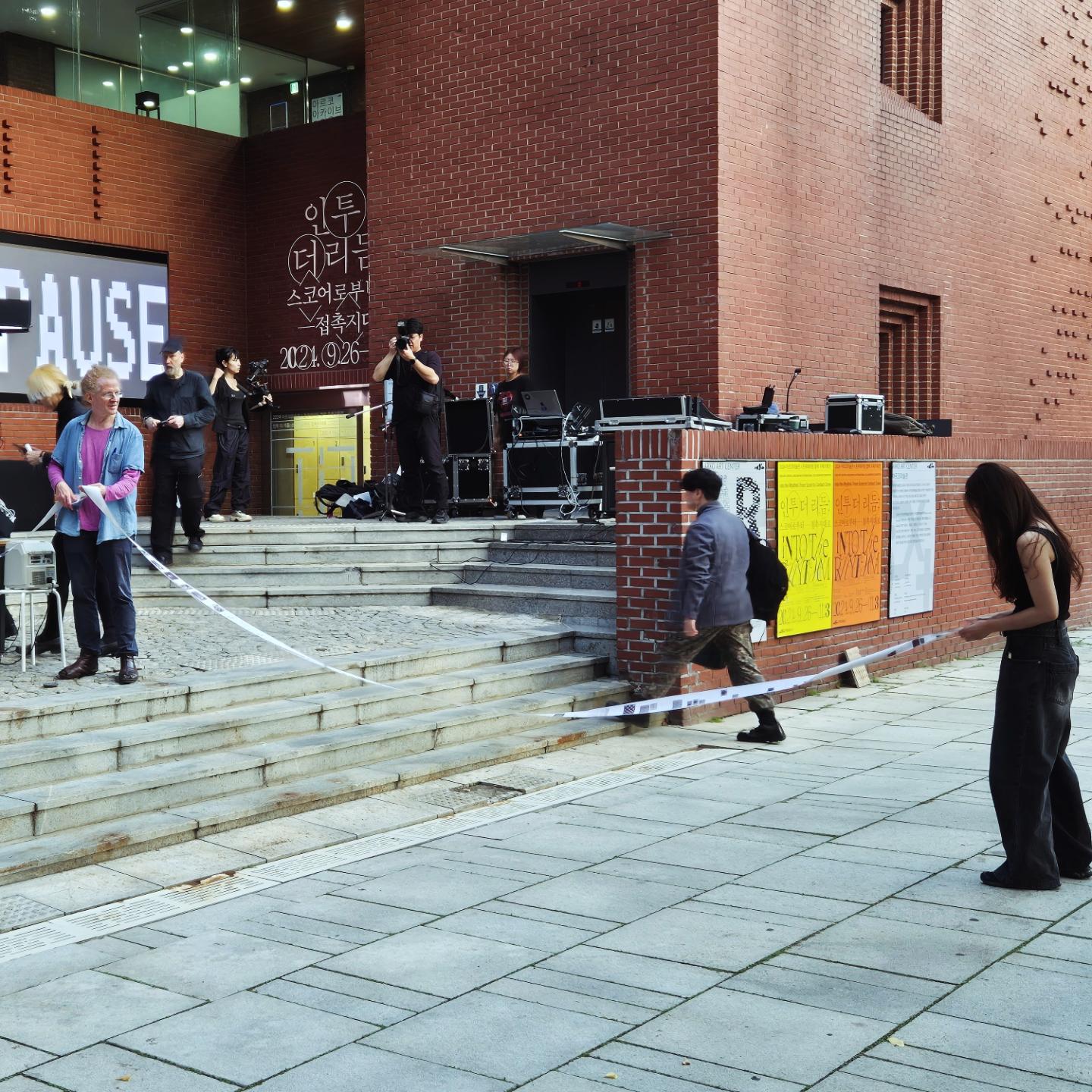
Into the Rhythm: From Score to Contact Zone, a collaboration between ARKO Art Center and OnCurating, explored the museum as a site of encounter, participation, and collective experience. Eleven artists examined musical, bodily, and social rhythms as forces capable of disrupting everyday routines and generating solidarity. Through artistic scores, performances, sound works, talks, and a participatory Workshop Week for the opening days, visitors became active contributors to new relationships, communal experiences, and practices of mutual care.
Excerpt from:
“Performing Exhibitionary Infrastructures” in: Into the Rhythm: From Score to Contact Zone
Exhibition Catalgue, Eds. Hamin Kim (Eng), Seoyoun Chang (Kor), January 2025
https://www.arko.or.kr/artcenter/board/view/510?bid=&page=2&cid=715915
San Keller’s Human-Based Infrastructure
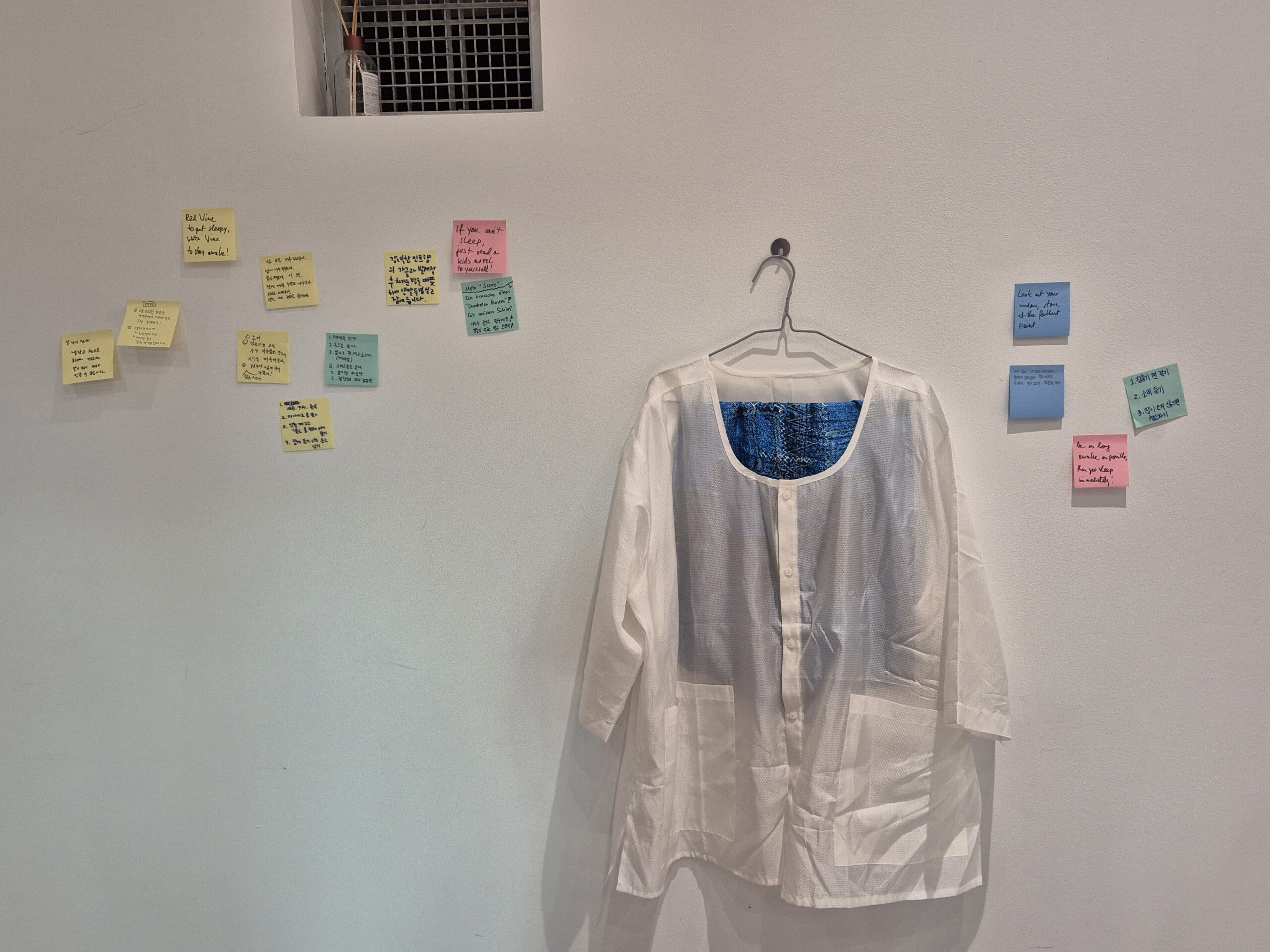
In good performative practice by challenging the exhibitionary infrastructure, San Keller changed his concept until the very last moment of the exhibition opening, and adjusted his performance throughout a constantly evolving processual practice during his stay. He finally created a score that asks the exhibition visitors about their sleeping rituals, and aimed for “a performative collection of routines, rituals and superstitions related to sleep”.[1] Keller staged a traditional Korean bed ensemble in the exhibition space, where he laid down in newly bought pajamas, awaiting the audience to engage in discussions with him about their sleeping rituals. Important for Keller was to establish connections with possible participants even before the performance started. This led to another infrastructural expansion by finding interested local collaborators known to Seoul [Name of Collaborators], that on their end reached out to peers, friends and their network to find discussion partners for the performance. In the first three days of the exhibition he finally met with the participants on his bed stage inside the exhibition space at ARKO, engaging in small group settings, sometimes in one-to-one constellations, discussing delicate and intimate details on the sleeping rituals of the others. On the fourth day, he gave a performative presentation on the stories he collected by activating the public with a survey-like questionnaire, creating social constellations based on the participants sleeping behaviors, triggering sometimes intimate discussions. The score and remnants of the performances stayed as an installation in the exhibition space.
I would like to describe this expanded performative practice a making of a human-based infrastructure with the help of the exhibitionary structure.
Performing infrastructure in more-than-human collaborations
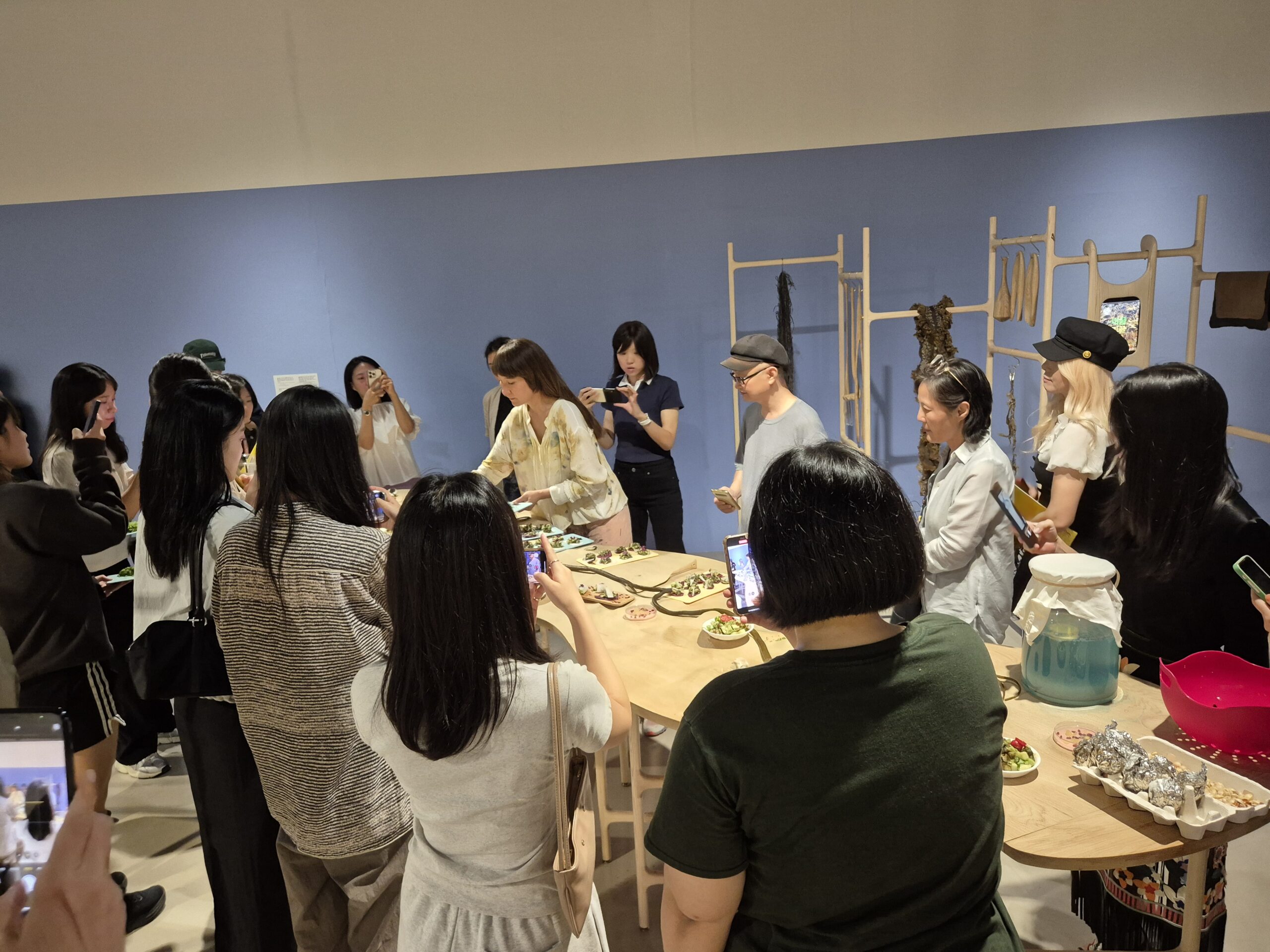
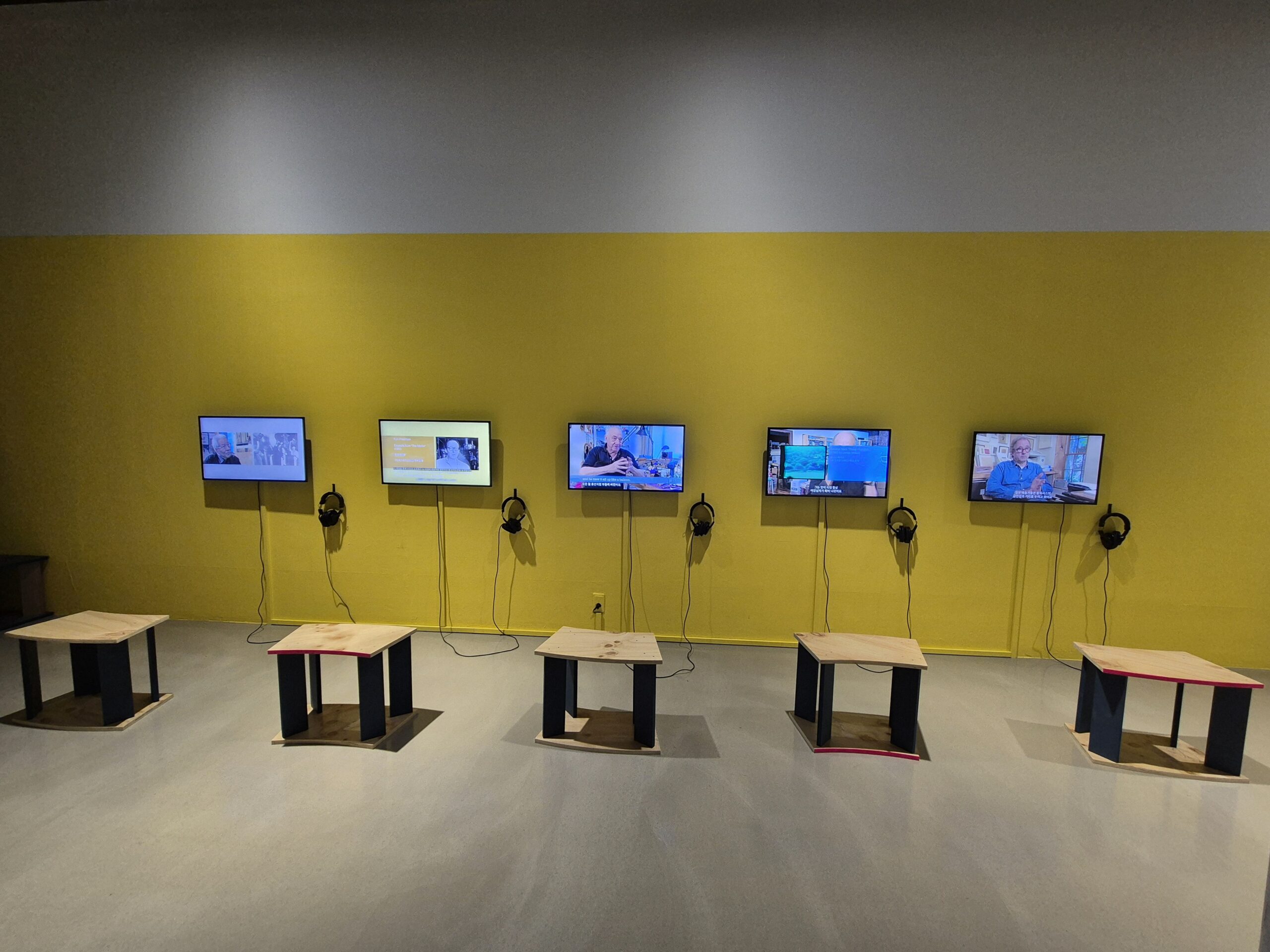
Maya Minder’s project also performative action and art object together in the exhibition space, yet followed a different logic. Whereas Keller’s staging material (the bed, pajama and “results of the workshops, hence written notes) entered as objects in the exhibition space, Minder installed “Green Open Food Evolution (GOFE)”, a installation work containing a table, cooking instruments, petri dishes, video interviews with scientists on microbiology and algae and a web-based platform that asks for recipes with algae (another score involved) from the beginning. The workshop “MICUL MICUL” – an “Algae Kitchen Lab” took place the day after the opening ceremony on the 27th November 2024. The rsvp workshop was announced with the slogan: “Come and cook, eat and discuss together!” and played out as a collective practice of cooking and thinking about one’s own chains of food sustenance (“What do we eat? Where does it come from? How is it produced?). We discussed among other things the carbon footprint of our food consumptions. Minder focuses with the workshop on the production of algae in various locations of the world, and how an increase in algae production could safe many ressources (water). The production of algae posits a very ressource sensitive approach of food production without creating much waste…
But the workshop does not stay at information exchange and knowledge production based on language, in the second part of the workshop the participants reproduced some collected recipes based on algae created in former workshops. Here a communal embodied performativity was enacted with the means of culinary action – an embodied knowledge production. The third part of the workshop finally brought the prepared food in the exhibition by staging it on the installation “Green Open Food Evolution (GOFE)”. The art work was so activated by the artists and the participants. The last act was the eating together with the regular audience of the exhibition.
On the one hand, the communal gathering of a diverse group of people discussing our ecological footprints based on our daily eating habits demonstrates a governmental awareness of our global interconnectedness; on the other hand, the assembly makes our more-than-human interdependence apparent. Minder talked about the symbiotic constellations of human organism and bacteria (the bacteria are with us), where many bacterias are needed in the fermentation of food and drinks (this is even more apparent in South Korea with its fermentation practice of “Kimchi” as the basic food soruce, while drinking Makoli).
[1] The score reads like this:
Scores to fall asleep (and awake)
San Keller
This performative research collects routines, rituals and superstitions related to sleep.
San Keller will be waiting for you from 26–29 Sept 2024 at ARKO Art Center, Seoul, South Korea in a traditional bed and invites you to tell him about your routines, habits, rituals and superstitions related to sleep. On the 29th September, 2pm, San Keller will present the documentations of his encounters and makes them later publicly accessible in a form yet to be published.
For example, no coffee after lunch, reading two pages from Tolstoy’s novel “Anna Karenina” before going to bed, sleeping exactly three hours in the evening before the exam results are announced. San Keller listens, asks questions and sleeps at least one night before recording the information he has gathered.
See: https://www.comingcommunities.org/en/score/scores-to-fall-asleep-and-awake/